Gift guide
The best books for 3-year-olds
Ten picture books that suit a three-year-old's attention span, rhythm and endless why-questions, each checked on its publisher's own page for format, length and age range, with advice on reading aloud, rereading and where to get books free.
Key takeaways
- At three, pick books with a line your child can finish and a plot short enough to survive being interrupted.
- Board books still earn their place at three: buy the hardcover for the bedside, the board book for the bag.
- Publishers list ages and page counts; this list uses theirs, and flags the one title whose listings disagree.
- The same book every night is useful — repeated readings of one story is how new words stick.
- Borrow first at the library or through Imagination Library, then buy the two or three asked for by name.
The best books for 3-year-olds are short, rhythmic, and worth reading twice in a row. At three, most children can follow a simple plot, finish a line they already know by heart, and stop you mid-page to ask why. This list gives ten picture books that fit that exact moment, with the format, page count and age range each publisher states on its own page. Updated November 2026.
The short answer: 10 books 3-year-olds ask for again
- Mr. Brown Can Moo! Can You? — Dr. Seuss. Sounds to copy.
- The Very Hungry Caterpillar — Eric Carle. Counting and days.
- Cars and Trucks and Things That Go — Richard Scarry. Pointing.
- Corduroy — Don Freeman. A lost button.
- Llama Llama Red Pajama — Anna Dewdney. Bedtime worry.
- Llama Llama Misses Mama — Anna Dewdney. Preschool.
- The Monster at the End of This Book — Jon Stone. Grover panics.
- Grumpy Monkey — Suzanne Lang. A bad mood.
- The Rabbit Listened — Cori Doerrfeld. Comfort.
- Dragons Love Tacos — Adam Rubin. Spicy salsa.
Each title below links to its publisher's own page. Every age range and page count here comes from there, not from us.
What makes a good book for a 3-year-old
Three is the age of the back-and-forth. The CDC lists talking with you in at least two back-and-forth exchanges, asking "who," "what," "where," or "why" questions, and saying what action is happening in a picture or book among the things most children do by three — and it defines a milestone as something 75% or more of children can do by that age (CDC, Milestones by 3 Years (opens in a new tab)).
That changes the job of the book. It needs a line your child can finish, a picture worth a question, and a plot short enough to survive being interrupted. Rhyme and repeated phrases do most of that work, because they hand your child a part to play.
It also does not need to be long. The American Academy of Pediatrics suggests reading aloud together for even 15 minutes a day, built into the bedtime routine (HealthyChildren.org, Brush, Book, Bed (opens in a new tab)).
Board book or picture book at three?
Both, and for different jobs. A three-year-old can turn paper pages now, but board books still earn their place: they survive the car, the floor and the fifth reading of the night.
Several books on this list come in both. Penguin Random House lists Llama Llama Red Pajama as a 40-page hardcover and a 34-page board book, and The Monster at the End of This Book as a 24-page Little Golden Book hardcover and a 24-page board book. Buy the hardcover for the bedside pile and the board book for the bag.
Books by what your 3-year-old is into
Sounds, rhyme and joining in
Mr. Brown Can Moo! Can You? (opens in a new tab) is a book of noises — a cow, a bee, a hippo chewing. Penguin Random House lists it for ages 2–5, 36 pages in hardcover and 24 as a board book. A just-turned-three-year-old takes over the sound effects by the second reading, which is the point.
The Very Hungry Caterpillar (opens in a new tab) gives you counting and the days of the week without ever sounding like a lesson, and the die-cut holes give small fingers something to do. One thing to know before you buy: the publisher's product details list this board book at ages 0–3, while another listing on the same page says 2–5. At three it still works, as a book your child can almost read alone.
Why questions and how things work
Richard Scarry's Cars and Trucks and Things That Go (opens in a new tab) is not a bedtime book. Golden Books lists it at 72 pages for ages 3–7, and most of those pages are a crowded scene the Pig Family drives through. You will not read it; you will be asked about it — which is what a three-year-old who has just found "what's that?" wants.
Big feelings and grumpy days
Grumpy Monkey (opens in a new tab) — 32 pages, ages 3–7 per Random House Studio — is about a chimpanzee in a bad mood whose friends keep telling him to cheer up. Three-year-olds recognize it instantly, and so will you, about an hour before dinner.
The Rabbit Listened (opens in a new tab) (Dial Books, 40 pages, ages 3–5) is the quieter one. Taylor's block tower falls down, every animal offers advice, and only the rabbit sits close and says nothing. It is a good book to have in the house before you need it. If feelings are the thing right now, we have a longer list of picture books about feelings.
Friends and starting preschool
Llama Llama Misses Mama (opens in a new tab) covers the first morning at preschool: Mama helps him get ready, Mama leaves, and the other children make the day worth staying for. Viking lists it at 40 pages for ages 2–5, with a 36-page board book.
Corduroy (opens in a new tab) is the older sibling of that feeling: a department-store bear missing a button, waiting to be chosen. The 40th-anniversary hardcover runs 48 pages, ages 2–5.
Bedtime
Llama Llama Red Pajama (opens in a new tab) is still the one. Baby Llama is tucked in, Mama goes downstairs, and the worry builds in rhyme until she comes back. Viking lists the hardcover at 40 pages, ages 2–5. Pair it with a simple toddler bedtime routine and you have the last twenty minutes of the day sorted.
Silly and interactive
The Monster at the End of This Book (opens in a new tab) turns page-turning itself into the joke: Grover begs you to stop, and your child turns the page anyway. Golden Books lists it at 24 pages, ages 3–7, with a hardcover list price of USD 6.99 (read November 2026) — the cheapest thing on this list and often the most reread.
Dragons Love Tacos (opens in a new tab) (Dial Books, 40 pages, ages 3–7) is the one that makes a three-year-old laugh at a joke they only half understand. Read it fast and loud.
The ten books side by side
| Book | Author | Format | Pages | Publisher's age range | Best for |
|---|---|---|---|---|---|
| Mr. Brown Can Moo! Can You? | Dr. Seuss | Hardcover, board book | 36 / 24 | 2–5 years | Sounds to copy |
| The Very Hungry Caterpillar | Eric Carle | Board book, die-cut | 26 | 0–3 years (see note above) | Counting and days |
| Cars and Trucks and Things That Go | Richard Scarry | Hardcover | 72 | 3–7 years | Pointing and naming |
| Corduroy (40th Anniversary Edition) | Don Freeman | Hardcover, board book | 48 | 2–5 years | Wanting to be chosen |
| Llama Llama Red Pajama | Anna Dewdney | Hardcover, board book | 40 / 34 | 2–5 years | Bedtime worry |
| Llama Llama Misses Mama | Anna Dewdney | Hardcover, board book | 40 / 36 | 2–5 years | Starting preschool |
| The Monster at the End of This Book | Jon Stone | Hardcover, board book | 24 | 3–7 years | Turning the page |
| Grumpy Monkey | Suzanne Lang | Hardcover, board book | 32 | 3–7 years | Bad moods |
| The Rabbit Listened | Cori Doerrfeld | Hardcover | 40 | 3–5 years | Comfort after a fall |
| Dragons Love Tacos | Adam Rubin | Hardcover | 40 | 3–7 years | Laughing out loud |
How long will one take? The honest answer is on the publisher's audiobook listings, where they exist: Penguin Random House gives four minutes for Llama Llama Red Pajama and Llama Llama Misses Mama, and seven minutes for Corduroy and Dragons Love Tacos. You will read slower, and be interrupted. Plan on five to ten minutes a book.
Books for the big moments at three
Three is when the big moments stack up: a bed without rails, a potty, a room full of strangers. A story is a gentle way in, because it happens to somebody else first.
For the potty specifically, we keep a separate list of the best potty training books. For bedtime, Llama Llama Red Pajama above does most of the work.
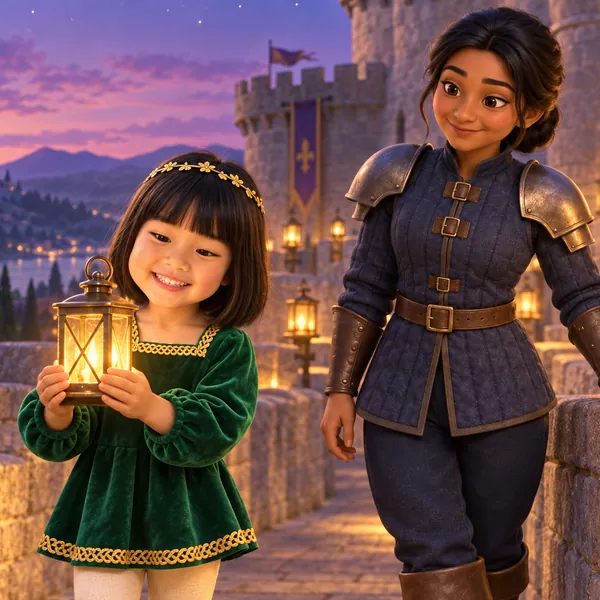
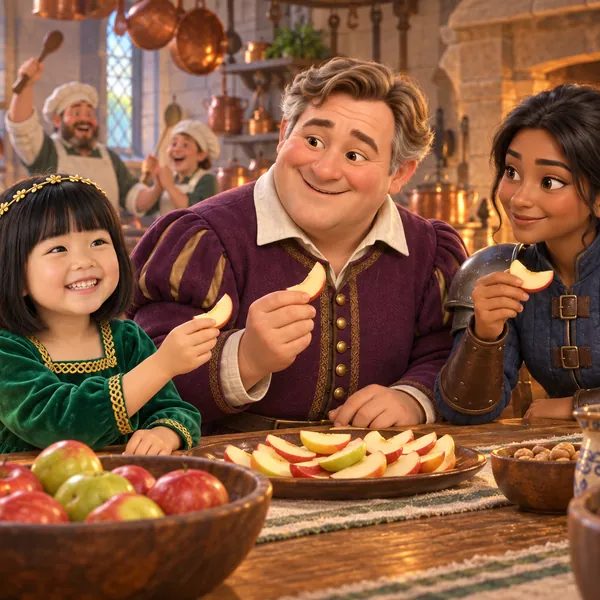
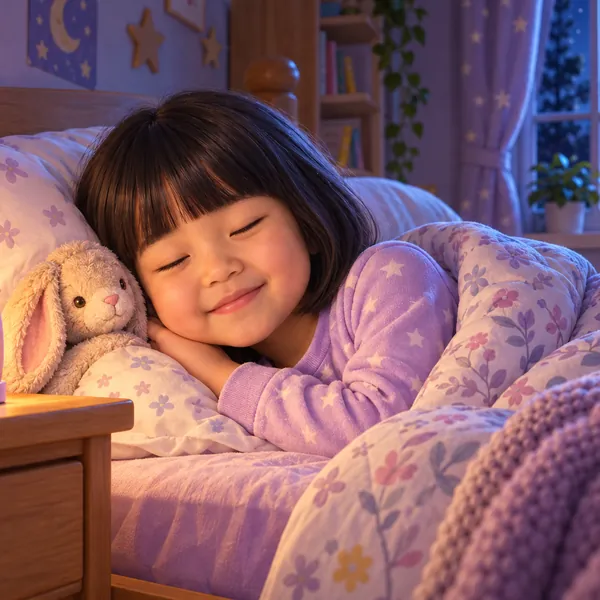
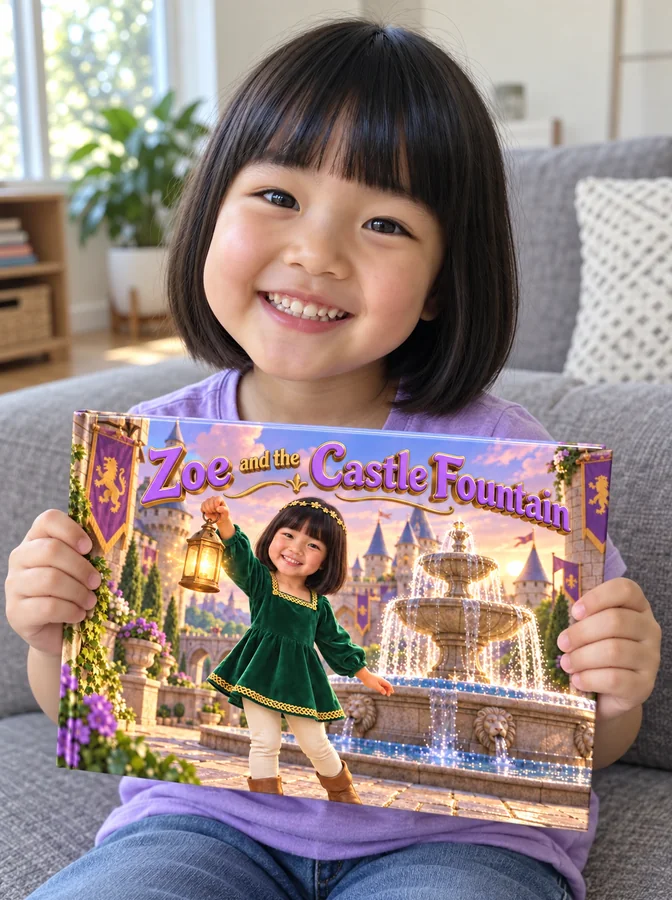
There is one more bedtime idea worth knowing about. Fiktola makes personalized children's picture books: the child is the hero, drawn from a parent's photo into a story written from scratch for them. Its bedtime story written around your child is an ordinary, fun adventure in a world you pick — mermaids, dinosaurs, space — and the sleep difficulty appears in only one short part, never named as a lesson.
You answer three questions first: what happens at night, how it shows in your child, and what helps them settle. Near the end of the adventure, as the fantasy world goes to sleep, the hero meets a little one there with the same trouble, and what helps your own child settles that little one too. The last three pages are bedtime at home.
You read the whole story and approve the characters before you pay. One book is $39.99 — the digital story plus a printed hardcover, shipping included. These books draw on bibliotherapy, using stories to help children with feelings and hard moments. A Fiktola growth book is a picture book, not therapy or medical advice.
Here is how that lands on the page, from Mila and the Sleepy Herd, an example sleep book:
1 of 3:
The feeling
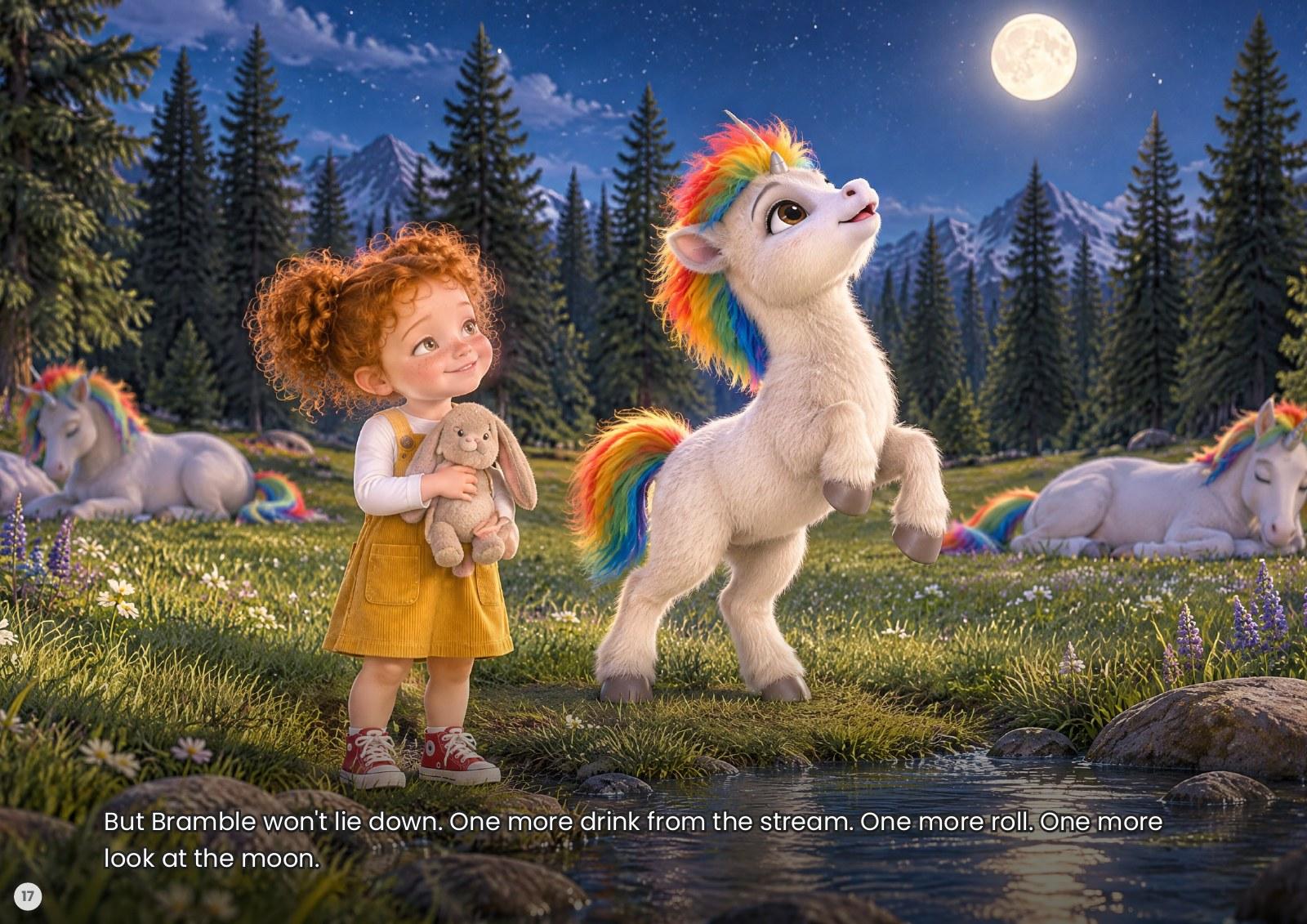
But Bramble won't lie down. One more drink from the stream. One more roll. One more look at the moon.
2 of 3:
What helps
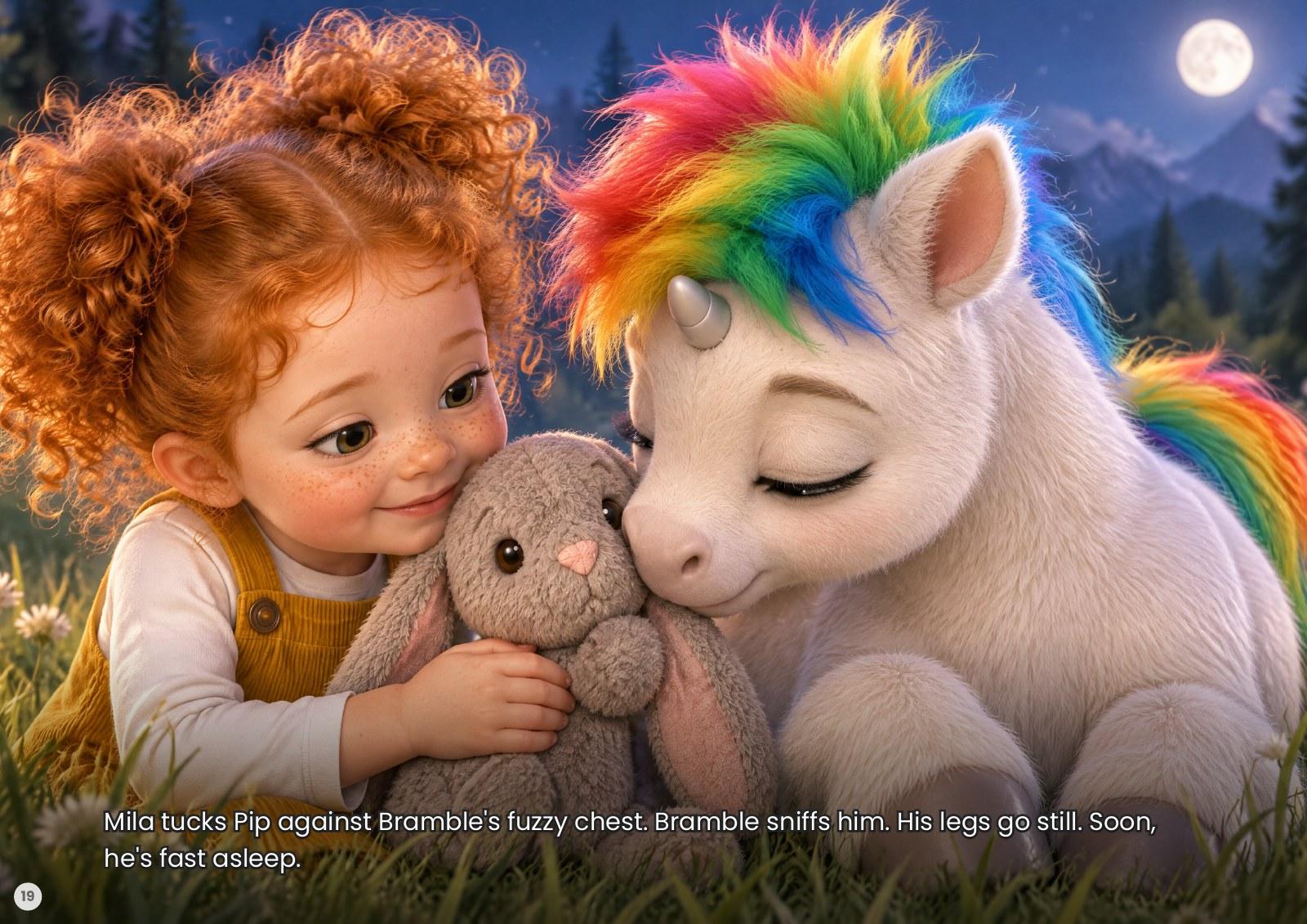
Mila tucks Pip against Bramble's fuzzy chest. Bramble sniffs him. His legs go still. Soon, he's fast asleep.
3 of 3:
Asleep at home
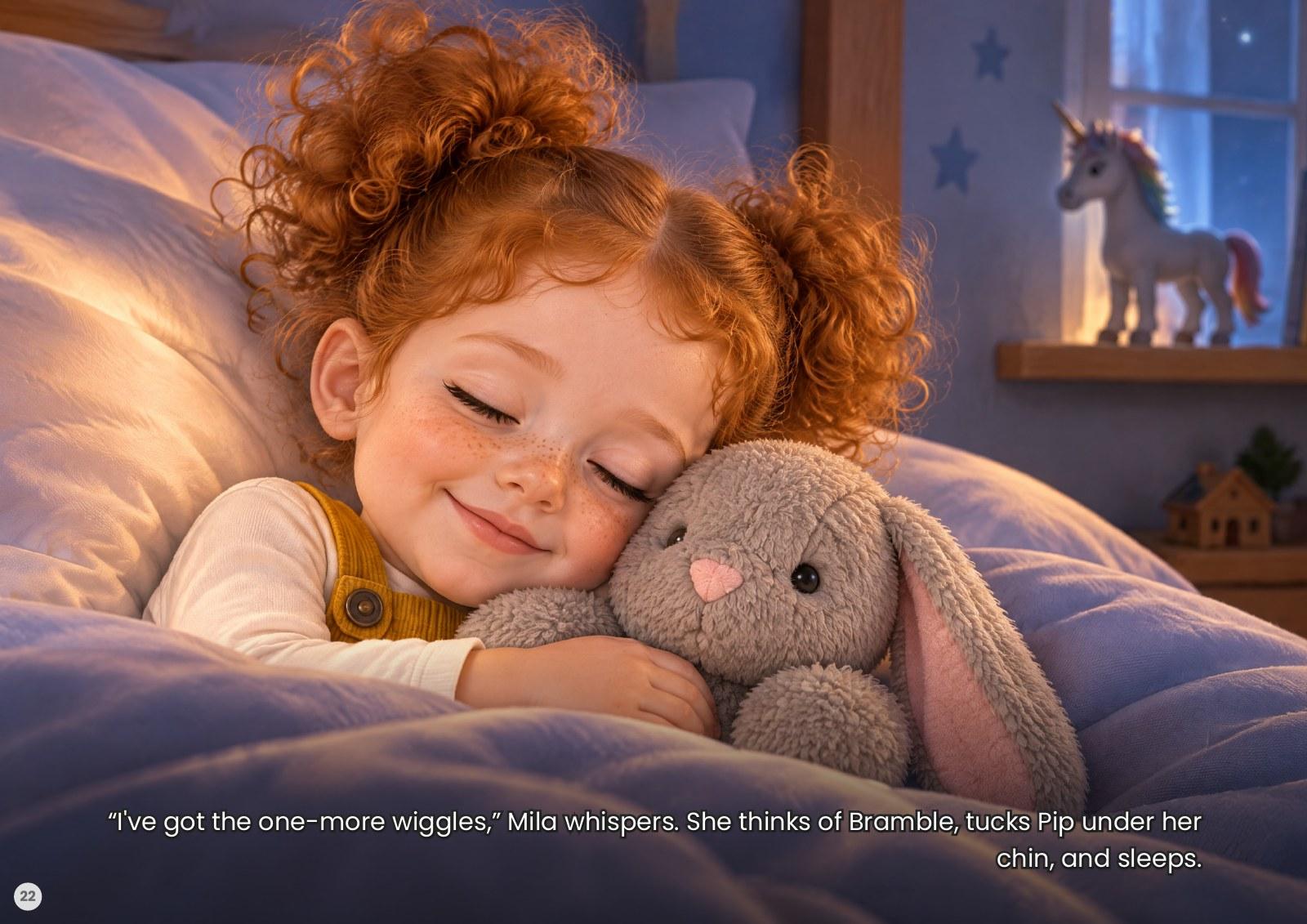
I've got the one-more wiggles, Mila whispers. She thinks of Bramble, tucks Pip under her chin, and sleeps.
Two kinds of books
One story. Two ways to tell it.
Same hero, same adventure, same price. One is pure adventure. The other quietly weaves in a coping skill.
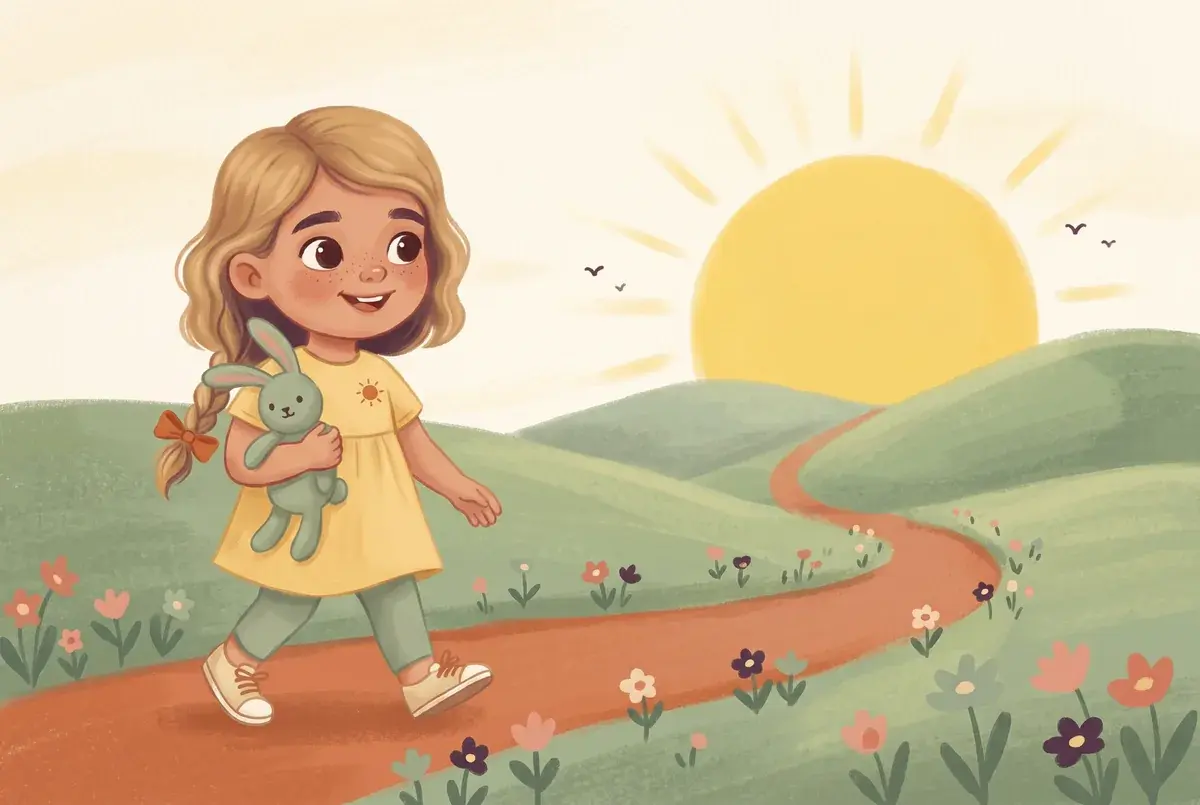
- 02The feeling
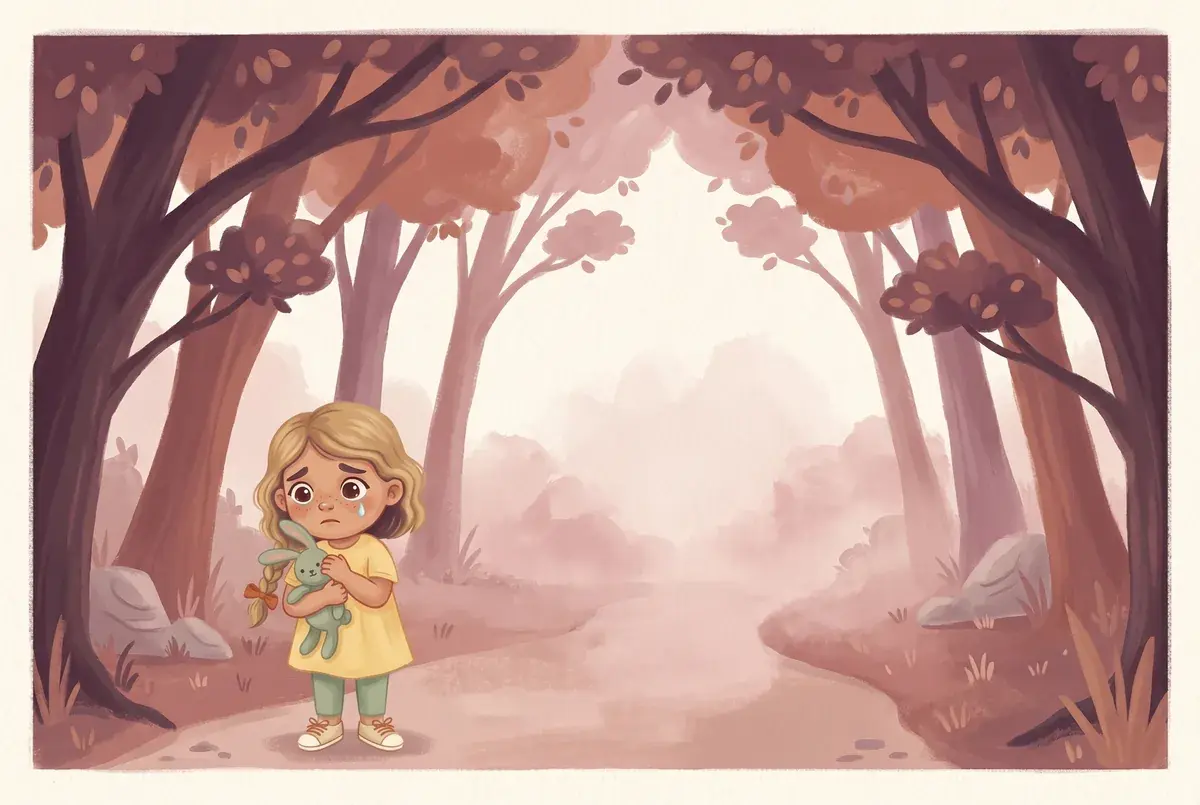
- 03The mentor
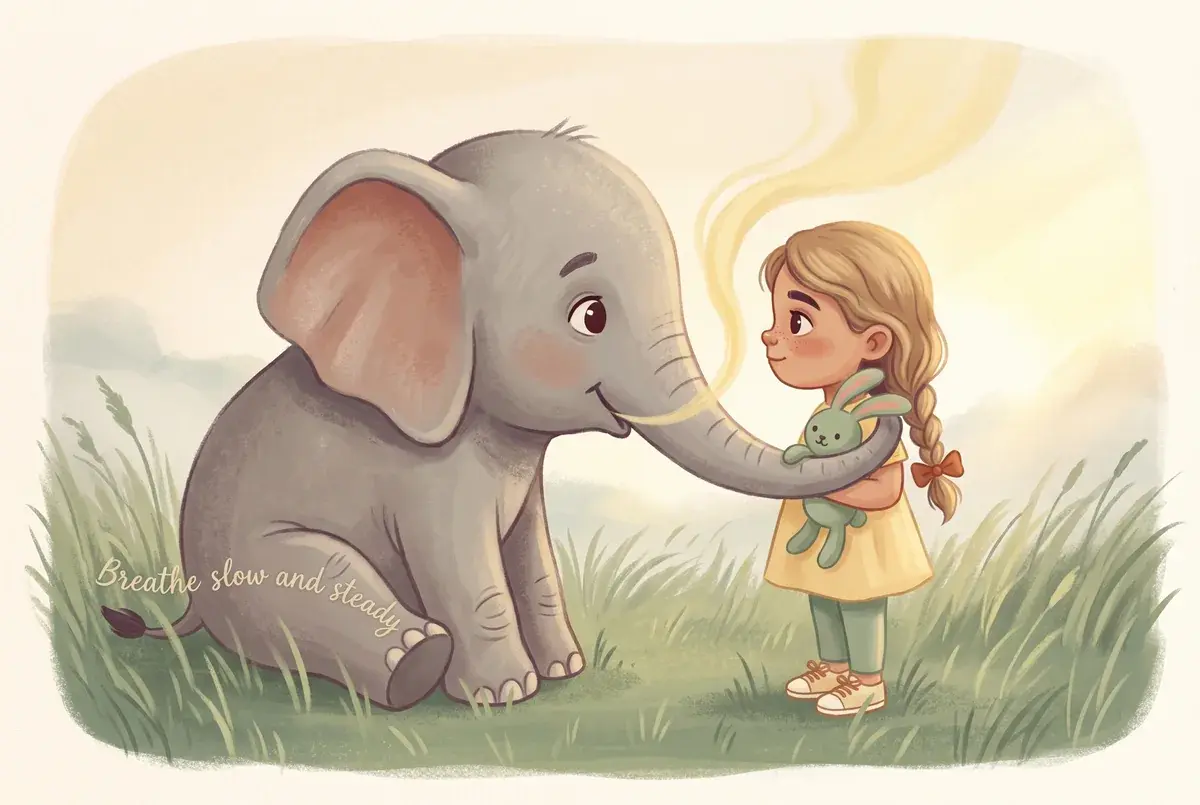
- 04It works
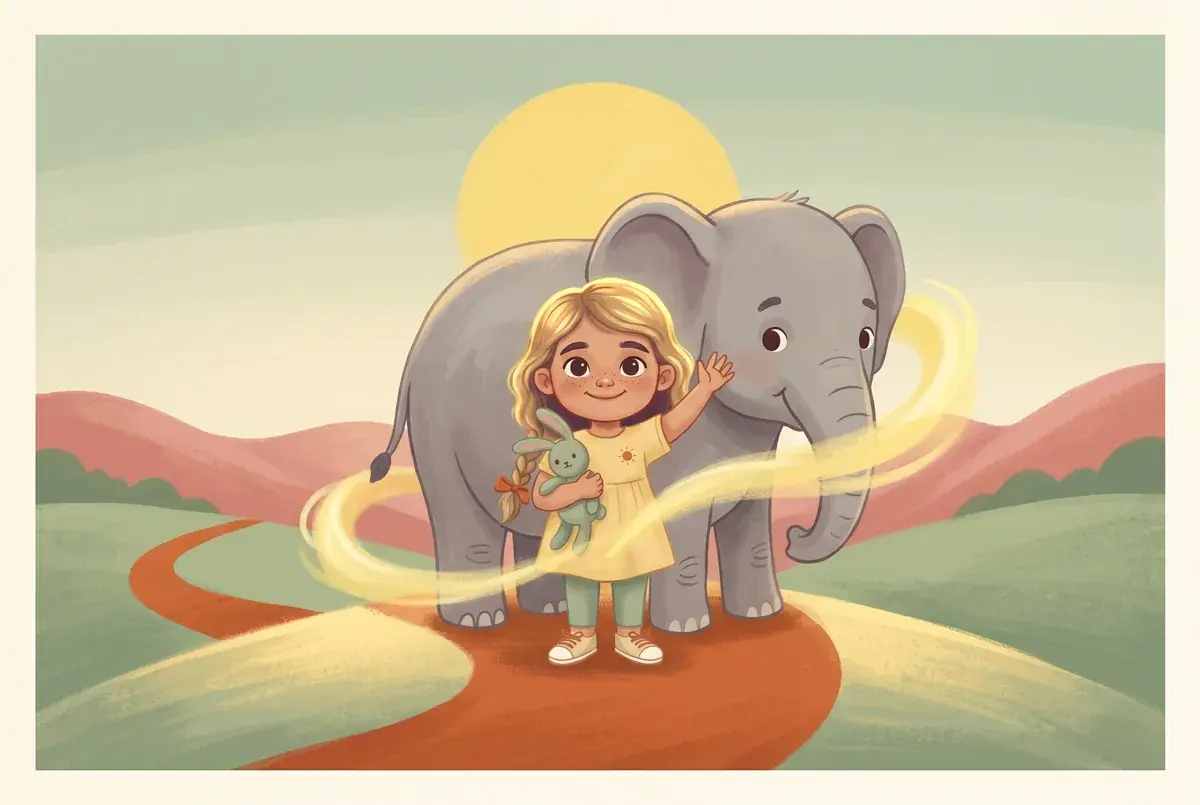
In both editions
- Your child as the hero, on every page
- Their name in the title
- 24 pages, landscape A4 · 24 illustrations
- All 36 themes to choose from
Only in Growth+
A gentle lesson, woven so subtly into the adventure it never feels like one. Still 80% fun.
- Bedtime
- Big feelings
- Goodbyes
- Potty
- Photos are deleted after printing — or 30 days after you approve
- Every story unique — no templates
- Every detail you give ends up in the story
How to read with a 3-year-old
Read less of the book and more with your child. Researchers call the back-and-forth version dialogic reading, built on a prompt-and-respond sequence (prompt, evaluate, expand, repeat) and five kinds of question — completion, recall, open-ended, wh- questions, and questions that connect the page to your child's own life (Morgan & Meier, Preventing School Failure, 2008 (opens in a new tab)).
In practice, at three, that is four habits:
- Pause before the line they know and let them finish it.
- Ask what is happening in the picture, which is exactly what the CDC suggests to parents of three-year-olds (CDC, Milestones by 3 Years (opens in a new tab)).
- Point things out — colors, shapes, numbers and letters — and answer their questions with enthusiasm, as the American Academy of Pediatrics advises (HealthyChildren.org, How to Share Books with Your Preschooler (opens in a new tab)).
- Let them pick, even when they pick the same one.
Why the same book every night is fine
It is not just fine; it may be the point. In a 2011 paper in Frontiers in Psychology, 3-year-olds were read storybooks over a week — one group heard the same story repeatedly, the other heard different stories containing the same new words the same number of times. The children who heard one story again and again learned and kept the new words; the others did not retain them (Horst, Parsons & Bryan, Frontiers in Psychology (opens in a new tab)).
So when your three-year-old hands you Llama Llama Red Pajama for the ninth night running, you are not stuck. You are on the useful part.
Getting books without buying all ten
Your library will lend every title here — the cheapest way to find out which two your child actually wants to own.
Dolly Parton's Imagination Library mails one age-matched book a month to an enrolled child's home, free to the family. Enrollment runs through a local program partner, and eligibility depends on living inside that partner's area, so check whether your address is covered (Imagination Library, United States (opens in a new tab)).
Then buy the two or three your child asks for by name. At three that is a short list, and it does not change for months.
Every detail you give ends up in the story
- Zoe · 5
 Afraid of the dark
 Light must stay on
 Princesses
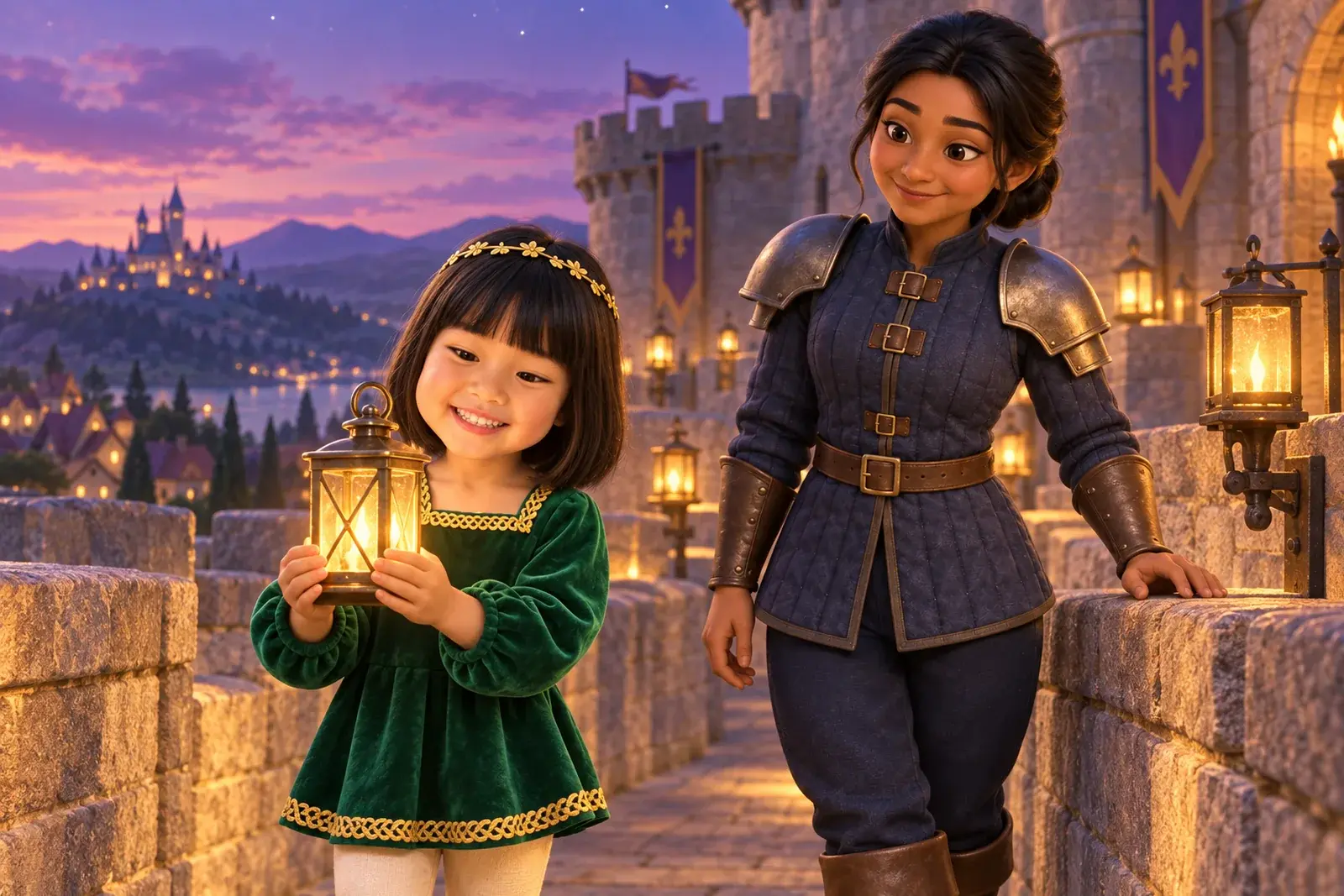
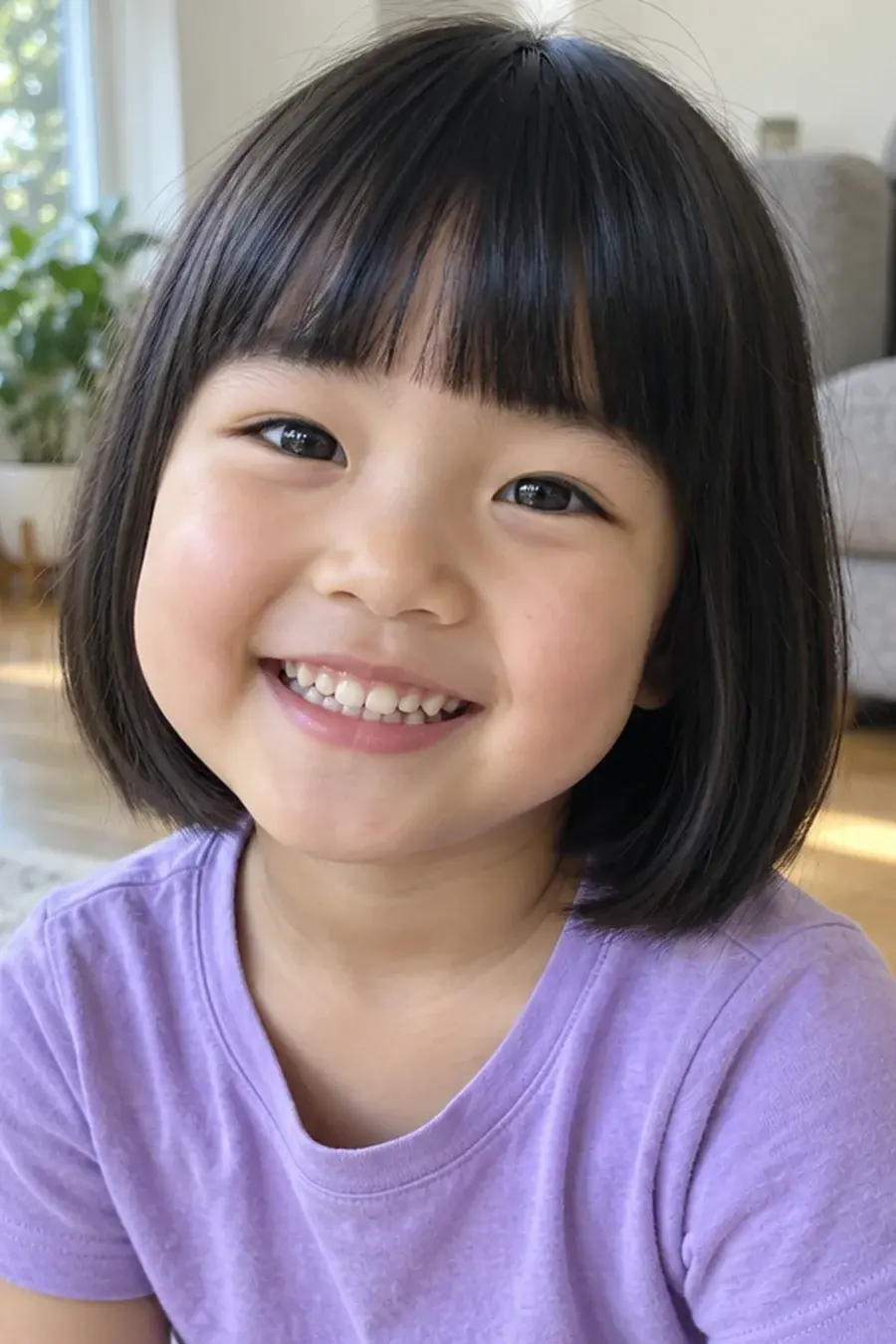 painted from her photo
+ 15 minutes waiting
- Photos are deleted after printing — or 30 days after you approve
- Every story unique — no templates
Questions parents ask
What books should a 3-year-old be reading?
Picture books with rhythm, repeated lines and one clear idea per page. At three a child can follow a simple plot and finish a line they know, so books like Mr. Brown Can Moo! Can You?, Llama Llama Red Pajama and The Very Hungry Caterpillar work well. Five to ten minutes a book is plenty.
Should a 3-year-old still have board books?
Yes. Board books are not only for babies; they survive the car, the floor and a fifth reading at bedtime. Many favorites exist in both formats. Penguin Random House lists Llama Llama Red Pajama as a 40-page hardcover and a 34-page board book, so you can keep the hardcover by the bed and the board book in the bag.
Why does my 3-year-old want the same book every night?
Because repetition is how they learn from it. In a 2011 paper in Frontiers in Psychology, three-year-olds who heard one storybook repeatedly across a week learned and kept the new words in it, while children who heard different books containing the same words did not retain them. Rereading a favorite is useful, not a rut.
What are good books for a 3-year-old boy or girl?
The same ones. Three-year-olds sort books by what is happening in them, not by who is reading. Pick by interest instead: sounds and rhyme, vehicles and how things work, big feelings, starting preschool, bedtime or silly. The ten books on this list cover all six, and every one suits any three-year-old.
How can I get free books for my 3-year-old?
Start with your public library, which will lend every title on this list. Dolly Parton's Imagination Library also mails one age-matched book a month to an enrolled child's home at no cost to the family. Enrollment runs through a local program partner, and eligibility depends on living inside that partner's area, so check your address on their site.
What classic books are good for 3-year-olds?
Several of the oldest ones still read best aloud. Penguin Random House dates the original Corduroy hardcover to 1968 and Mr. Brown Can Moo! Can You? to 1970, and lists The Monster at the End of This Book as a Little Golden Book with a hardcover list price of USD 6.99 as of November 2026. Richard Scarry's Cars and Trucks and Things That Go and The Very Hungry Caterpillar belong on the same shelf.
Sources
- Important Milestones: Your Child By Three Years (opens in a new tab) — Centers for Disease Control and Prevention
- Brush, Book, Bed: How to Structure Your Child's Nighttime Routine (opens in a new tab) — American Academy of Pediatrics (HealthyChildren.org)
- How to Share Books with Your Preschooler (opens in a new tab) — American Academy of Pediatrics (HealthyChildren.org)
- Get the Story Straight: Contextual Repetition Promotes Word Learning from Storybooks (opens in a new tab) — Horst, Parsons & Bryan, Frontiers in Psychology (2011)
- Dialogic Reading's Potential to Improve Children's Emergent Literacy Skills and Behavior (opens in a new tab) — Morgan & Meier, Preventing School Failure (2008)
- Dolly Parton's Imagination Library — United States (opens in a new tab) — Dollywood Foundation
- Grumpy Monkey by Suzanne Lang (opens in a new tab) — Penguin Random House
- The Rabbit Listened by Cori Doerrfeld (opens in a new tab) — Penguin Random House
- Llama Llama Red Pajama by Anna Dewdney (opens in a new tab) — Penguin Random House
- Llama Llama Misses Mama by Anna Dewdney (opens in a new tab) — Penguin Random House
- The Monster at the End of This Book by Jon Stone (opens in a new tab) — Penguin Random House
- Mr. Brown Can Moo! Can You? by Dr. Seuss (opens in a new tab) — Penguin Random House
- The Very Hungry Caterpillar by Eric Carle (opens in a new tab) — Penguin Random House
- Richard Scarry's Cars and Trucks and Things That Go (opens in a new tab) — Penguin Random House
- Corduroy 40th Anniversary Edition by Don Freeman (opens in a new tab) — Penguin Random House
- Dragons Love Tacos by Adam Rubin (opens in a new tab) — Penguin Random House