Books for Big Moments: Sleep, Potty, Feelings and New Siblings
Children's Story Books About Feelings: The Best Picks for Preschoolers, by Feeling
Sixteen children's story books about feelings for ages 2 to 6, sorted by the feeling your preschooler is dealing with: all feelings, anger, worry, sadness, jealousy and shyness. Each has its publisher's age range, plus a comparison table and tips for reading together.
Key takeaways
- Match the book to the feeling your child is having now: mad, worried, sad, jealous or shy.
- For 2- and 3-year-olds, start with a book of feeling words, such as In My Heart.
- Read feelings books on a calm day, then link the story to your child's own day.
- The Memory Box is about a death and The Invisible String touches on loss, so read them yourself first.
The best children's story books about feelings for preschoolers are short, warm and clear about one feeling at a time. A good one shows the feeling in a character's face and body, and then shows what helps. Below are 16 picture books sorted by the feeling your child is dealing with right now: all feelings, anger, worry, sadness, jealousy and shyness. Each comes with the age range its publisher lists, plus a table to compare them and tips for reading them together.
The short answer: our favorite feelings books
- For naming every feeling: The Color Monster by Anna Llenas.
- For a first feelings book at 2 or 3: In My Heart by Jo Witek.
- For big, mad feelings: When Sophie Gets Angry—Really, Really Angry… by Molly Bang.
- For a child who worries: Ruby Finds a Worry by Tom Percival.
- For sad days: The Rabbit Listened by Cori Doerrfeld.
Ages below are the ranges on each publisher's own page. Where we couldn't open that page, they come from Kirkus Reviews or Publishers Weekly.
Books about all the feelings
These three give your child words for feelings before they need them. In My Heart suits the youngest.
In My Heart: A Book of Feelings (opens in a new tab) by Jo Witek, illustrated by Christine Roussey (Abrams Appleseed, ages 2–4). Each spread shows how a feeling, from happy to sad to angry, feels inside the body. A heart cut through the pages runs from start to finish. Best for: a very first feelings book.
The Feelings Book (opens in a new tab) by Todd Parr (Little, Brown, ages 4–6, also a board book). Bright, bold pictures of everyday moods, from silly and brave to the less fun ones. Best for: quick, funny feelings talk at any time of day.
The Color Monster: A Story About Emotions (opens in a new tab) by Anna Llenas (Little, Brown, ages 4–8, also a board book). A monster wakes up with his feelings in a jumble. A little girl helps him sort them, giving each one a color. Best for: a child who can't say what's wrong.
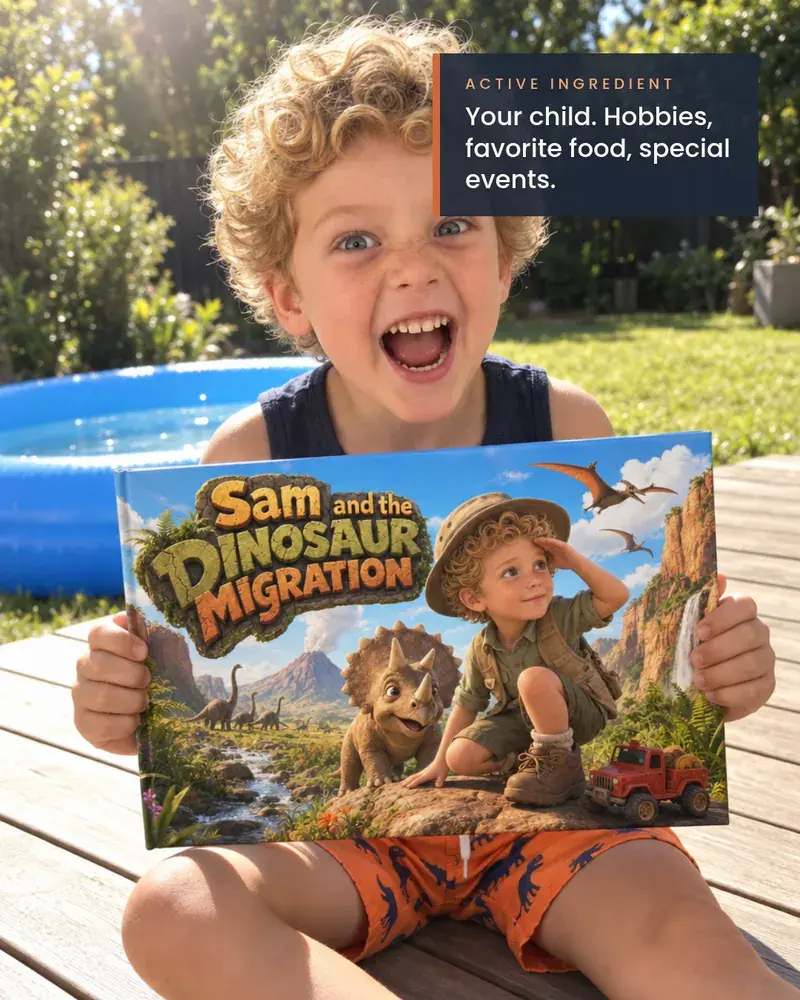
Every story unique — no templates
- Photos are deleted after printing — or 30 days after you approve
- Every detail you give ends up in the story
Books about anger and big, mad feelings
When Sophie Gets Angry—Really, Really Angry… (opens in a new tab) by Molly Bang (Blue Sky Press/Scholastic, ages 2–7 per Publishers Weekly). Sophie's sister grabs her toy gorilla, and Sophie explodes. She runs outside until she is worn out, has a cry, and notices the world around her. She comes home calm. Best for: showing that a big feeling passes.
Grumpy Monkey (opens in a new tab) by Suzanne Lang, illustrated by Max Lang (Random House Studio, ages 3–7, also a board book). Jim the chimpanzee is in a bad mood for no clear reason. His friends keep trying to cheer him up, and after a meltdown he decides a grumpy day is allowed. Best for: a child who keeps hearing "just smile."
Llama Llama Mad at Mama (opens in a new tab) by Anna Dewdney (Viking, ages 2–5). A dull shopping trip ends in a full llama tantrum. Mama helps him calm down, and together they make shopping more fun. Best for: toddlers who melt down on errands.
Books about worry and fear
Two gentle picks for a child who worries. Both show that a worry gets smaller once it's shared.
Ruby Finds a Worry (opens in a new tab) by Tom Percival (Bloomsbury, ages 4–6 per Kirkus). Ruby's little yellow Worry grows bigger the more she ignores it. When she finally talks about it, it shrinks. The AAP and Reach Out and Read include it on their feelings reading list (opens in a new tab). Best for: a child who keeps worries inside.
Wemberly Worried (opens in a new tab) by Kevin Henkes (Greenwillow, ages 4–7 per Kirkus). A little mouse worries about everything, and then about starting nursery school. There she meets a friend who worries too. Best for: the weeks before preschool starts.
Books about sadness and loss
Two of these touch on loss, so read them yourself first. The Memory Box is about a death.
The Rabbit Listened (opens in a new tab) by Cori Doerrfeld (Dial, ages 3–5). After something upsetting happens, Taylor gets advice from one animal after another, and none of it helps. Then a rabbit sits close and simply listens. Best for: any sad or frustrated day, and learning how to comfort a friend.
The Invisible String (opens in a new tab) by Patrice Karst, illustrated by Joanne Lew-Vriethoff (Little, Brown, ages 4–8). An unseen string of love ties us to the people we miss, near or far. It speaks gently to separation, loss and loneliness. Best for: missing someone.
The Memory Box: A Book About Grief (opens in a new tab) by Joanna Rowland, illustrated by Thea Baker (Beaming Books, ages 3–8). A child fills a box with memories of someone who has died. It fits the loss of a relative, a friend or a pet. The parent guide at the back is written from a Christian perspective. Best for: after a death in the family.
Books about jealousy, sharing and new siblings
Peter's Chair (opens in a new tab) by Ezra Jack Keats (Viking, ages 3–7, also a board book). Peter's parents repaint his old baby furniture for his new sister. Peter sets out to save the one piece left, his little blue chair. Best for: a new baby at home.
Julius, the Baby of the World (opens in a new tab) by Kevin Henkes (Greenwillow, ages 4 and up per Publishers Weekly). Lilly can't stand the fuss over her new baby brother. Then a cousin is rude about Julius, and Lilly jumps to his defense. Best for: a jealous big sibling.
Llama Llama Time to Share (opens in a new tab) by Anna Dewdney (Viking, ages 2–5). Llama doesn't want to share with his new neighbor, Nelly Gnu. A tug-of-war tears his Fuzzy Llama. Mama mends it and keeps it aside until he's ready to share. Best for: before a playdate.
Books about shyness and loneliness
Shy (opens in a new tab) by Deborah Freedman (Viking, ages 3–5). Shy has only seen birds in books and longs to meet a real one. But he is too timid to leave the safe edge of the page. Best for: a quiet child who likes to watch first.
The Day You Begin (opens in a new tab) by Jacqueline Woodson, illustrated by Rafael López (Nancy Paulsen Books, ages 5–8). It's about walking into a room where nobody is quite like you, and finding the courage to share your story. Best for: an older preschooler starting school.
Feelings books at a glance
| Book | Author | Feeling | Ages | Best for |
|---|---|---|---|---|
| In My Heart | Jo Witek | All feelings | 2–4 | A first feelings book |
| The Feelings Book | Todd Parr | All feelings | 4–6 | Everyday moods |
| The Color Monster | Anna Llenas | All feelings | 4–8 | Sorting mixed-up feelings |
| When Sophie Gets Angry | Molly Bang | Anger | 2–7 | Seeing anger pass |
| Grumpy Monkey | Suzanne Lang | Grumpiness | 3–7 | Bad moods are allowed |
| Llama Llama Mad at Mama | Anna Dewdney | Anger | 2–5 | Tantrums on errands |
| Ruby Finds a Worry | Tom Percival | Worry | 4–6 | Talking about worries |
| Wemberly Worried | Kevin Henkes | Worry | 4–7 | Starting preschool |
| The Rabbit Listened | Cori Doerrfeld | Sadness | 3–5 | Being listened to |
| The Invisible String | Patrice Karst | Missing someone | 4–8 | Separation and grief |
| The Memory Box | Joanna Rowland | Grief | 3–8 | After a death |
| Peter's Chair | Ezra Jack Keats | Jealousy | 3–7 | A new baby |
| Julius, the Baby of the World | Kevin Henkes | Jealousy | 4+ | A jealous big sibling |
| Llama Llama Time to Share | Anna Dewdney | Sharing | 2–5 | Playdates |
| Shy | Deborah Freedman | Shyness | 3–5 | Quiet watchers |
| The Day You Begin | Jacqueline Woodson | Feeling left out | 5–8 | A new class |
How a story can help with big feelings
A preschooler feels things long before they can name them. The American Academy of Pediatrics says reading about common feelings together can help children recognize their own. It suggests talking about feelings while a child is calm, to prepare for harder moments (HealthyChildren.org (opens in a new tab)). Using stories this way is called bibliotherapy. A 2015 review of eight trials, in children aged 5 to 16, found small to moderate positive effects on behavior (Montgomery & Maunders, Children and Youth Services Review (opens in a new tab)).
Fiktola makes personalized picture books where your child is the hero, drawn from your photo. Our anger book draws on bibliotherapy. You tell us when the anger is worst, how your child shows it and what sometimes helps. The book is an ordinary, fun adventure in the world you pick. In the middle, over three or four pages, the hero feels the anger in their body, names it in their own words and does what helps. Here is that moment in our example book, Noah and the Thunder Herd:
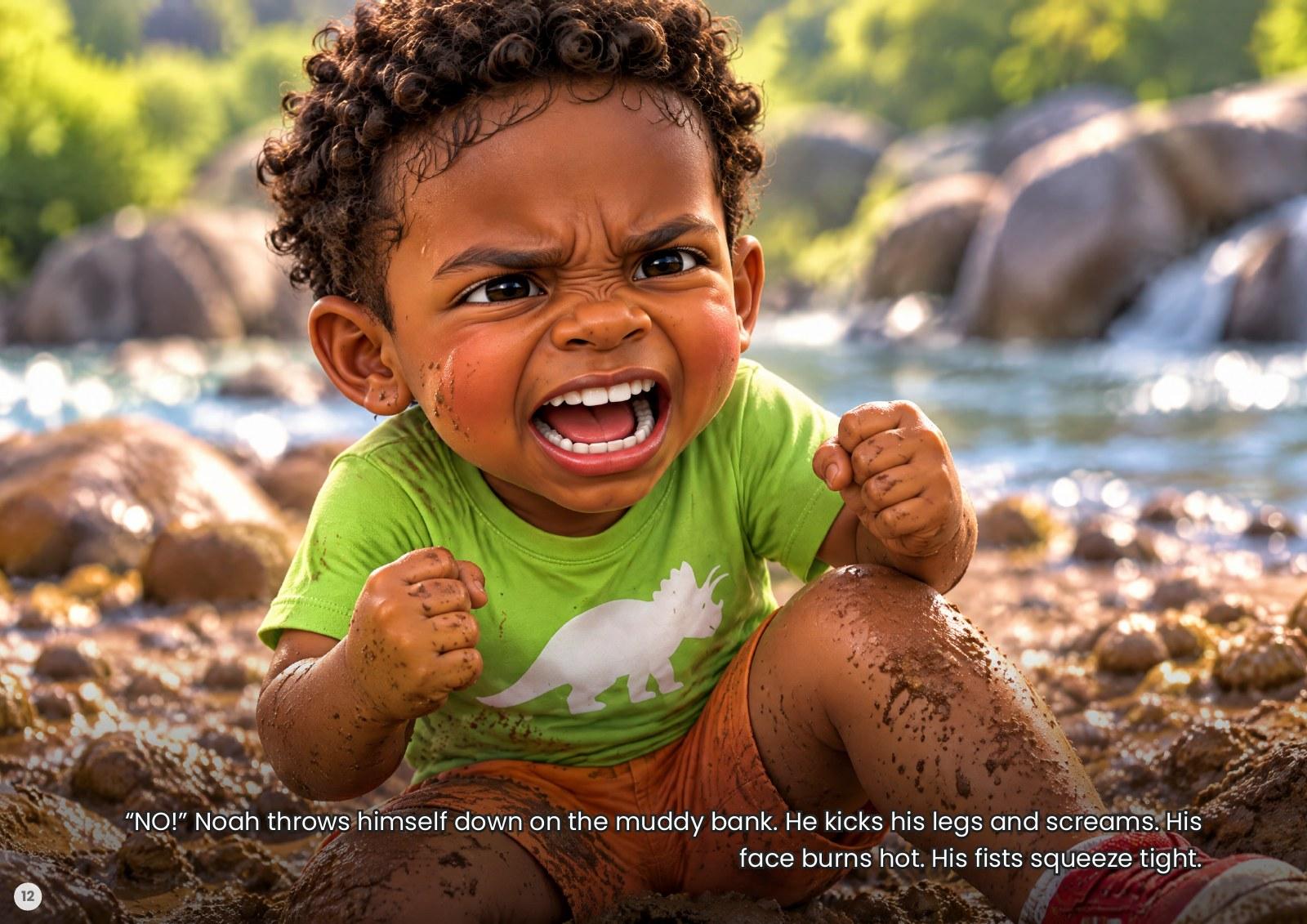
1 of 3:
The feeling
“NO!” Noah throws himself down on the muddy bank. He kicks his legs and screams. His face burns hot. His fists squeeze tight.
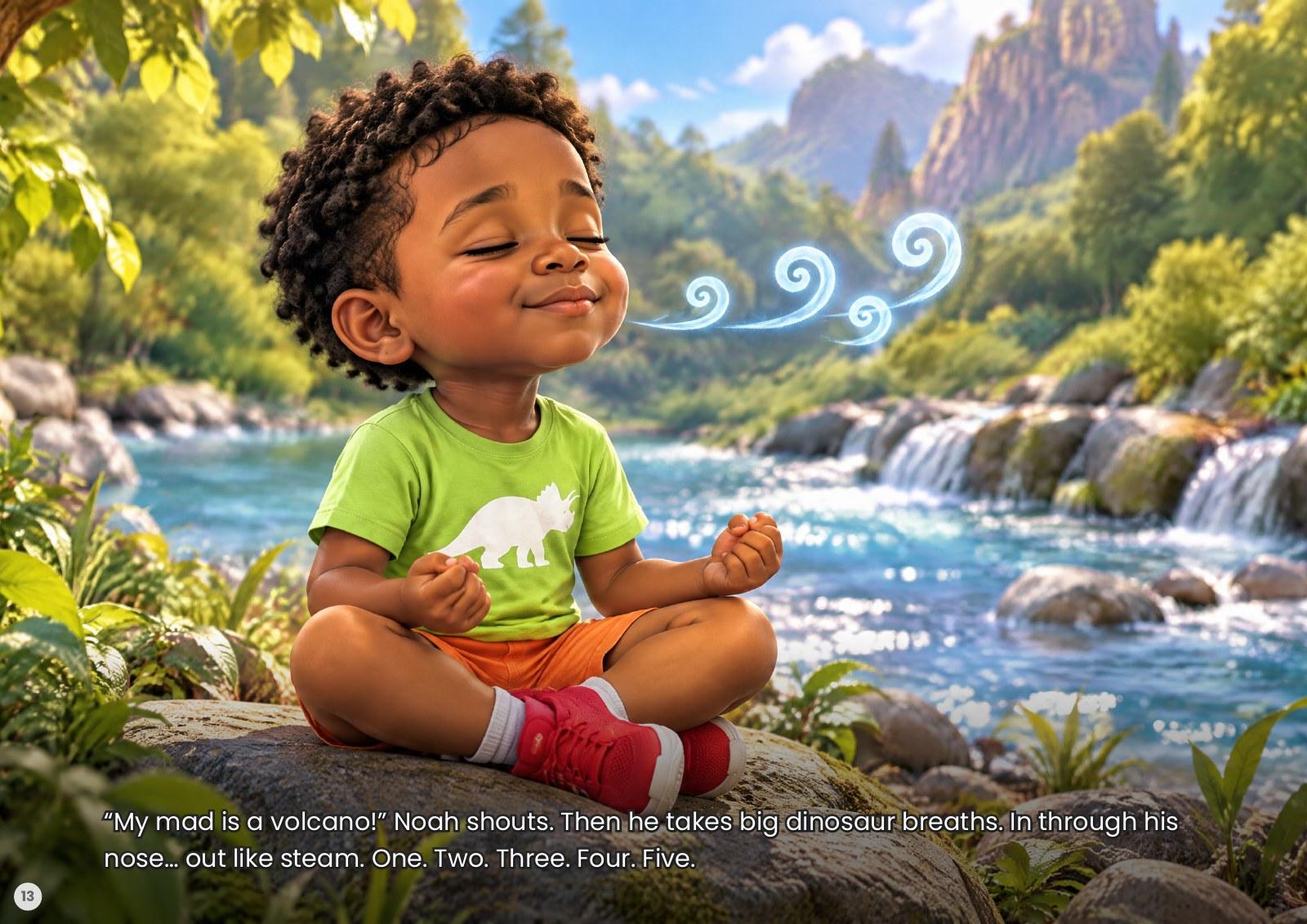
2 of 3:
What helps
“My mad is a volcano!” Noah shouts. Then he takes big dinosaur breaths. In through his nose… out like steam. One. Two. Three. Four. Five.
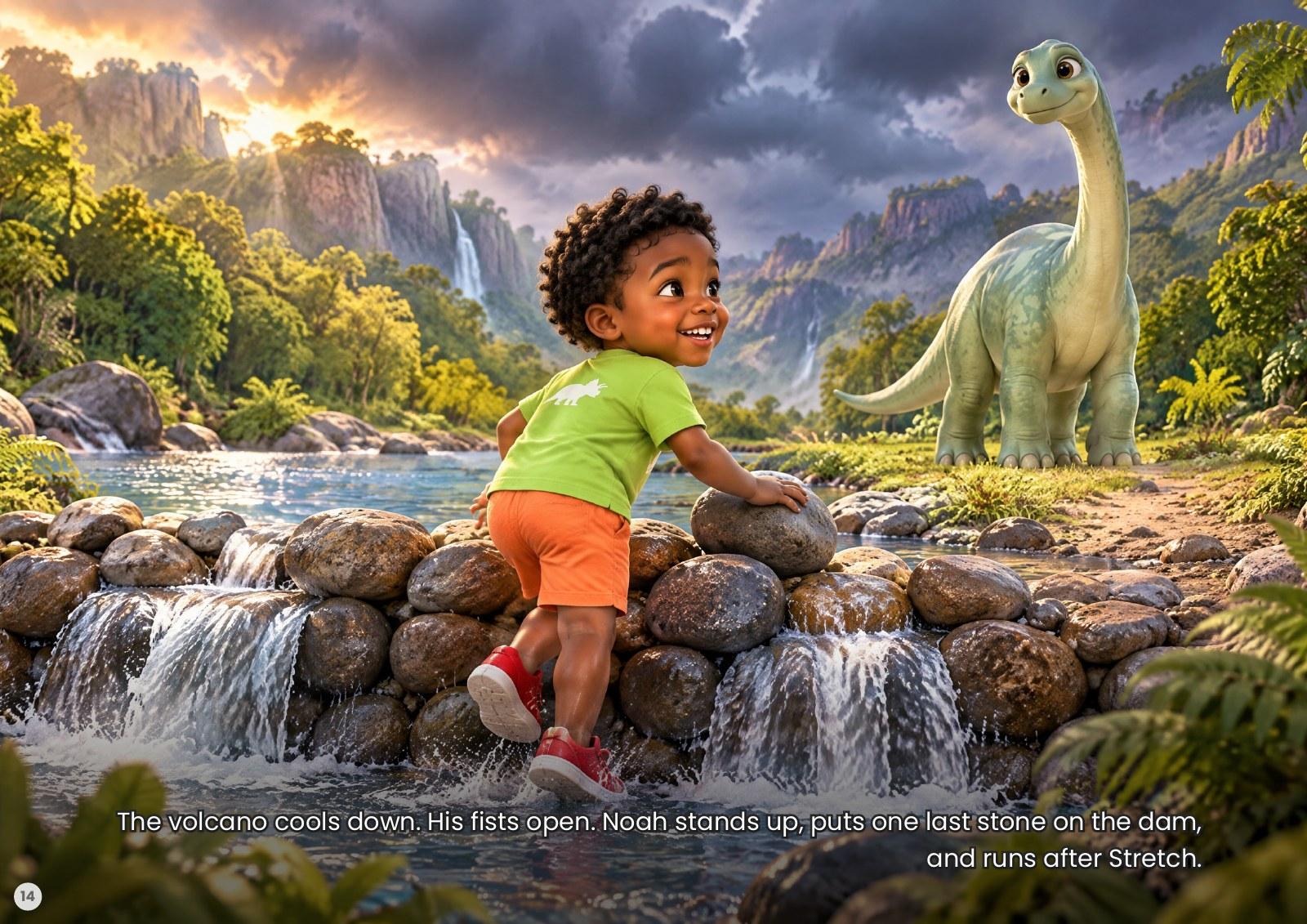
3 of 3:
It works
The volcano cools down. His fists open. Noah stands up, puts one last stone on the dam, and runs after Stretch.
You read the whole story before you pay: a story where your child calms a big mad feeling. For goodbyes, there is also a story for a child who worries at goodbyes. It's a picture book, not therapy, and it sits happily next to the books above.
How to read a feelings book with a preschooler
Shared reading helps build the foundation for healthy social-emotional development, the AAP says (HealthyChildren.org (opens in a new tab)). A few habits make a feelings book do more.
-
Pick a calm moment. The CDC suggests practicing feeling words when your child is calm or only a little upset. In the middle of a tantrum, keep everyone safe and wait until you are both calm (CDC (opens in a new tab)).
-
Pause on faces. Ask, "How do you think she feels? How can you tell?" Point to the eyebrows, the fists, the tears.
-
Name it simply. Use one plain word: mad, sad, scared, proud. A feelings chart can help, the CDC notes.
-
Link it to their day. "Remember when your tower fell down? Was that a Sophie feeling?"
-
Read it again. Let your child choose the same book many times. Each reading is another calm rehearsal.
-
Give it a slot. A feelings book fits well into story time in a toddler bedtime routine.
Feeling words and questions by age
| Around age 3 | Around age 5 | |
|---|---|---|
| Words to try | happy, sad, mad, scared, tired | frustrated, jealous, worried, lonely, proud, disappointed |
| Questions to ask | "Is he happy or sad?" "Show me your mad face." | "What made her feel that way?" "What could help him?" "Have you ever felt like that?" |
If your child's big feelings often seem too big to handle, or they get in the way of daycare, sleep or play, talk to your pediatrician.
Two kinds of books
One story. Two ways to tell it.
Same hero, same adventure, same price. One is pure adventure. The other quietly weaves in a coping skill.
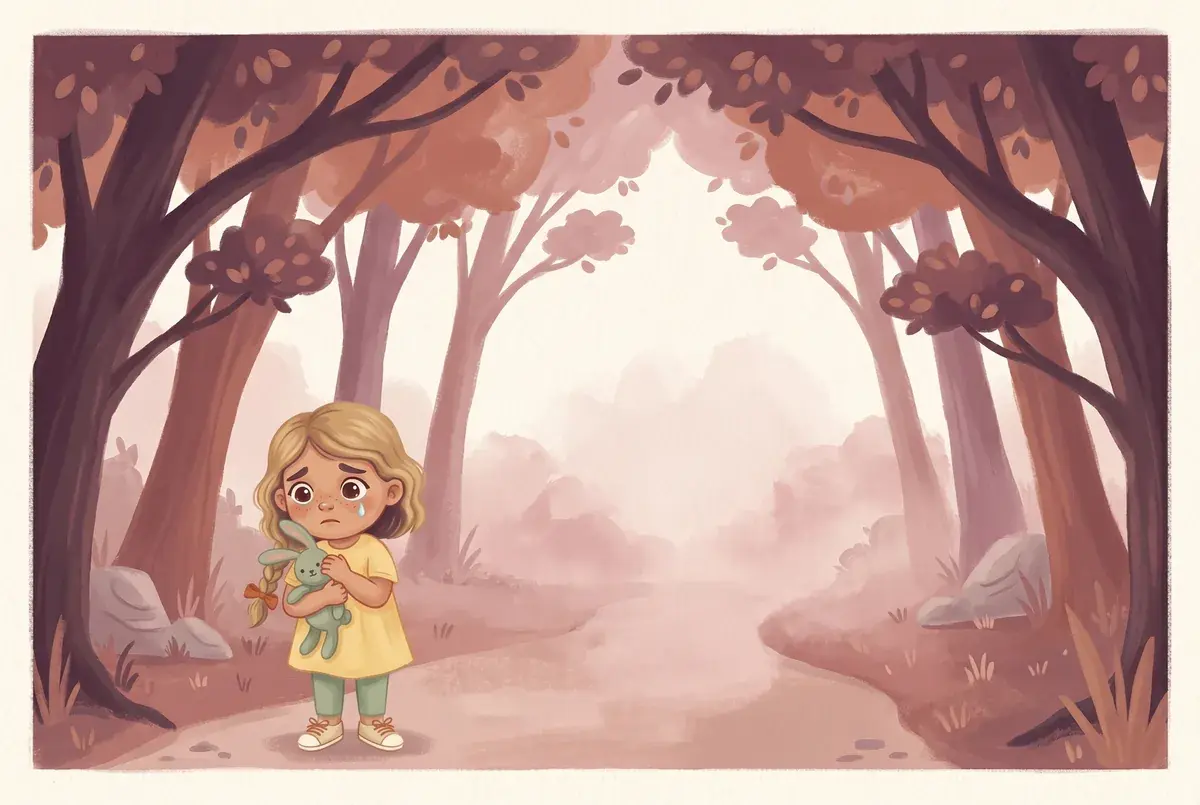
- 02The feeling
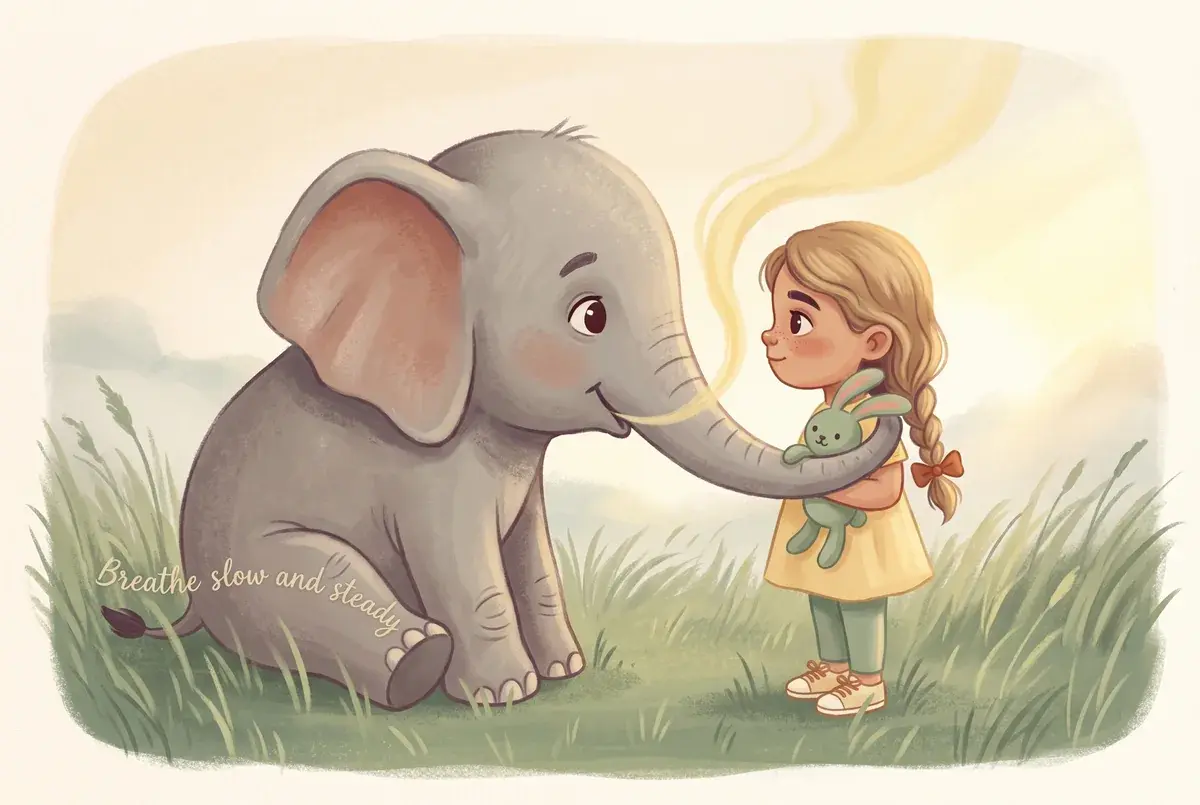
- 03The mentor
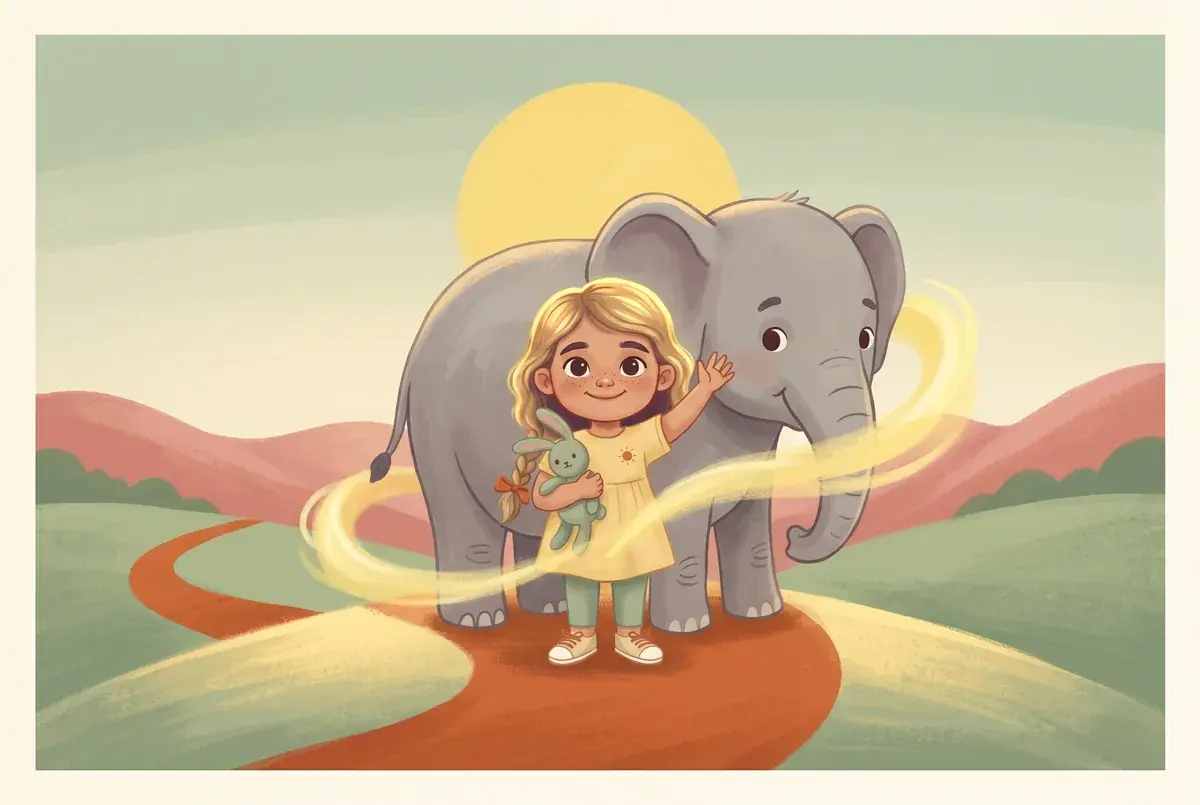
- 04It works
In both editions
- Your child as the hero, on every page
- Their name in the title
- 24 pages, landscape A4 · 24 illustrations
- All 36 themes to choose from
Only in Growth+
A gentle lesson, woven so subtly into the adventure it never feels like one. Still 80% fun.
- Bedtime
- Big feelings
- Goodbyes
- Potty
- Photos are deleted after printing — or 30 days after you approve
- Every story unique — no templates
- Every detail you give ends up in the story
Questions parents ask
What are good children's story books about feelings for preschoolers?
Good picks include The Color Monster by Anna Llenas for sorting mixed-up feelings, In My Heart by Jo Witek as a first feelings book, When Sophie Gets Angry by Molly Bang for anger, Ruby Finds a Worry by Tom Percival for worries and The Rabbit Listened by Cori Doerrfeld for sad days. Choose the book that matches the feeling your child is having right now.
What is a good first book about emotions for a 2- or 3-year-old?
Start with a simple book that names feelings and shows them on faces. In My Heart by Jo Witek is listed for ages 2 to 4 and describes how each feeling feels inside. Llama Llama Mad at Mama is listed for ages 2 to 5. The Feelings Book by Todd Parr also comes as a sturdy board book for small hands.
How do picture books help children understand feelings?
A picture book shows a feeling from the outside: a face, a body, a situation and what happens next. The American Academy of Pediatrics says reading about common feelings together can help children recognize their own and build empathy. It also gives you and your child shared words to use later, when the real feeling arrives.
How do I talk about feelings with my preschooler after reading?
Keep it short and calm. Ask how the character felt and how your child can tell, then name the feeling in one plain word. Link it to your child's own day, such as a tower that fell down. The CDC suggests practicing feeling words when your child is calm, and waiting until everyone has settled after a tantrum.
Are there books about anger for toddlers?
Yes. Llama Llama Mad at Mama by Anna Dewdney is listed for ages 2 to 5 and follows a tantrum on a shopping trip. When Sophie Gets Angry by Molly Bang is listed for ages 2 to 7 by Publishers Weekly. Grumpy Monkey also has a board book edition for the youngest readers. Read them on a calm day, not mid-meltdown.
What books help a child who worries a lot?
Ruby Finds a Worry by Tom Percival shows a worry that grows when it is ignored and shrinks once it is shared. Wemberly Worried by Kevin Henkes follows a little mouse who worries about everything, including starting nursery school. If worries often keep your child from sleeping, playing or going to daycare, talk to your pediatrician.
Which books help a preschooler with grief or loss?
The Memory Box by Joanna Rowland is about the death of a relative, friend or pet, and its parent guide is written from a Christian perspective. The Invisible String by Patrice Karst is gentler and fits missing someone in any way. The Rabbit Listened suits sad days in general. Read each one yourself before you share it.
Sources
- Recommended Reading: Books to Teach Kids About Feelings & Resilience (opens in a new tab) — American Academy of Pediatrics and Reach Out and Read (HealthyChildren.org)
- Beyond Literacy: Shared Reading Starting at Birth Offers Lifelong Benefits (opens in a new tab) — American Academy of Pediatrics (HealthyChildren.org)
- Tips for Noticing and Naming Emotions (opens in a new tab) — Centers for Disease Control and Prevention
- The effectiveness of creative bibliotherapy for internalizing, externalizing, and prosocial behaviors in children: A systematic review (Montgomery & Maunders, 2015) (opens in a new tab) — Children and Youth Services Review, via University of Birmingham