Books for Big Moments: Sleep, Potty, Feelings and New Siblings
The Best Potty Training Books for Toddlers (and a Few for Parents)
Our picks of the best potty training books for toddlers, sorted by age from first board books to funny stories for three-year-olds, plus a comparison table, four books for parents, and simple ways to make a potty book part of training.
Key takeaways
- Under two, choose a sturdy board book with flaps, songs or very few words.
- From about two, pick a short story with a character your child can copy.
- The AAP suggests reading children's books about using the toilet so the process makes sense.
- Parent books range from gradual to intensive methods, and the AAP says you needn't pick just one.
- Read the book before you start, keep it by the potty, and let your child read it to a toy.
The best potty training books for toddlers are short, cheerful and plain about what happens on the potty. For a child under two, start with a sturdy board book. From two, pick a simple story with a character your child can copy. From three, humor and a little drama work well. Below you'll find our picks by age, a comparison table, four potty training books for parents, and how to use a potty book so it actually helps.
The short answer: our picks
- For a first potty book: Potty by Leslie Patricelli, a funny board book about a baby choosing between diaper and potty.
- For busy hands: P Is for Potty!, a Sesame Street board book with more than 30 flaps.
- For a toddler who loves songs: Potty Time with Bean by Ms. Rachel.
- For a child who holds it too long: Dinosaur vs. the Potty by Bob Shea.
- For you: The American Academy of Pediatrics Guide to Toilet Training.
Potty training books for toddlers, by age
Ages below are the ranges each publisher lists. Where we couldn't open the publisher's page, they come from Kirkus Reviews or Publishers Weekly.
18 months to 2 years: board books
Potty (opens in a new tab) by Leslie Patricelli (Candlewick, ages 0–3). A baby weighs up diaper versus potty, with funny pictures of every thought, and ends proud of doing it. It also comes as an English-Spanish edition, Potty/Bacinica (opens in a new tab).
P Is for Potty! (opens in a new tab) by Naomi Kleinberg (Random House, ages 0–3). Elmo explains the potty, and more than 30 sturdy flaps keep small hands busy during practice sits.
Potty Time with Bean (opens in a new tab) by Ms. Rachel (Random House, ages 0–3). Familiar songs and simple gestures help toddlers learn to use the potty, with potty training tips for caregivers at the back.
Big Girl Panties (opens in a new tab) and Big Boy Underpants (opens in a new tab) by Fran Manushkin (Random House, ages 0–3). Two rhyming companion books that make new underwear, just like a parent's, something to look forward to.
Diapers Are Not Forever (opens in a new tab) by Elizabeth Verdick (Free Spirit, up to age 4). A board book from the Best Behavior series, also sold in an English-Spanish edition.
2 to 3 years: a simple story
Once Upon a Potty (opens in a new tab) by Alona Frankel (ages 1–3). A potty classic from 1975 with separate girl and boy editions, which differ mainly in anatomy.
Potty! (opens in a new tab) by Carol Zeavin and Rhona Silverbush (Magination Press, ages 2–3). Toddlers at different stages, some ready and some not yet, with the message that everyone gets there when they're ready. It comes from the American Psychological Association's children's imprint and includes notes for adults.
Time to Pee! (opens in a new tab) by Mo Willems (Hyperion, ages 2–4). Cartoon mice carry signs telling a child not to panic, and cheer them from doubt to pride. A good pick for a worried child.
3 and up: humor and a little drama
Dinosaur vs. the Potty (opens in a new tab) by Bob Shea (Disney-Hyperion, ages 3–5). A red dinosaur insists he doesn't need to go, through lemonade, sprinklers and puddles, until his victory dance turns into a potty dance. He makes it, just in time.
Everyone Poops (opens in a new tab) by Taro Gomi (ages 2–5). A frank, matter-of-fact look at how animals and people all poop, first published in Japan. It suits the child who asks why.
Two kinds of books
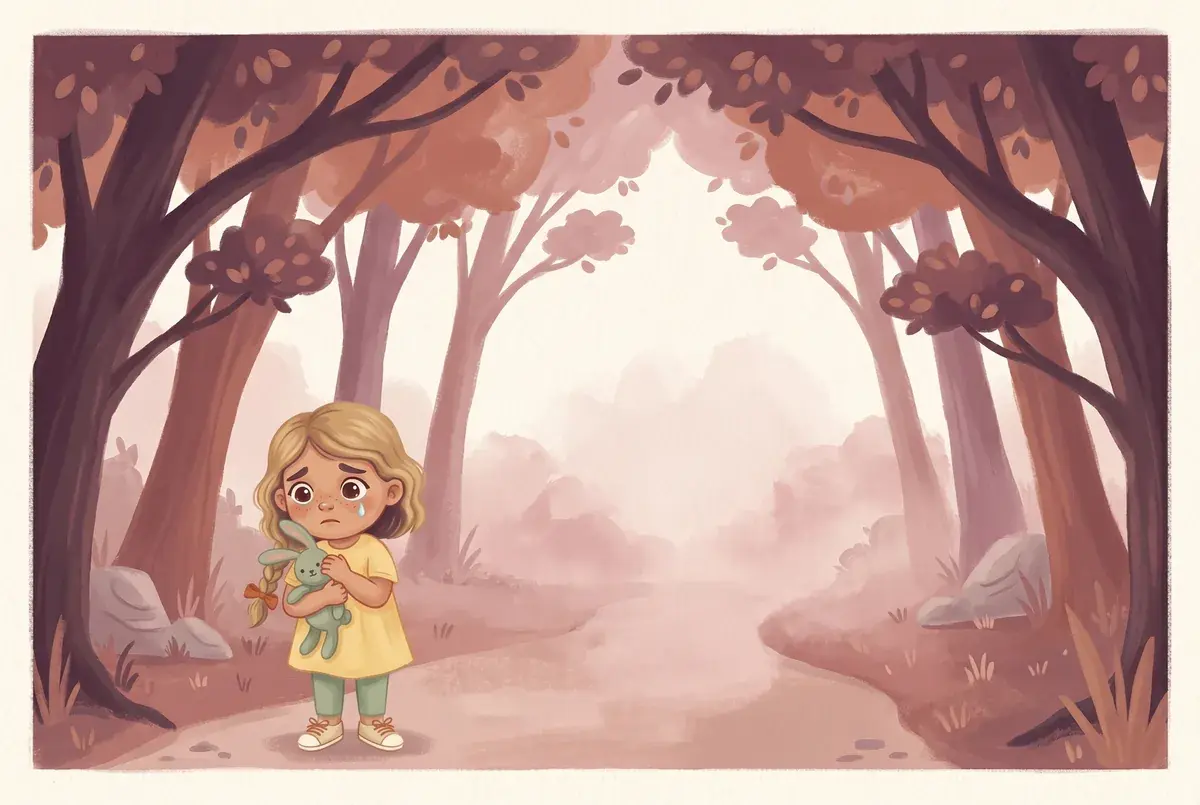
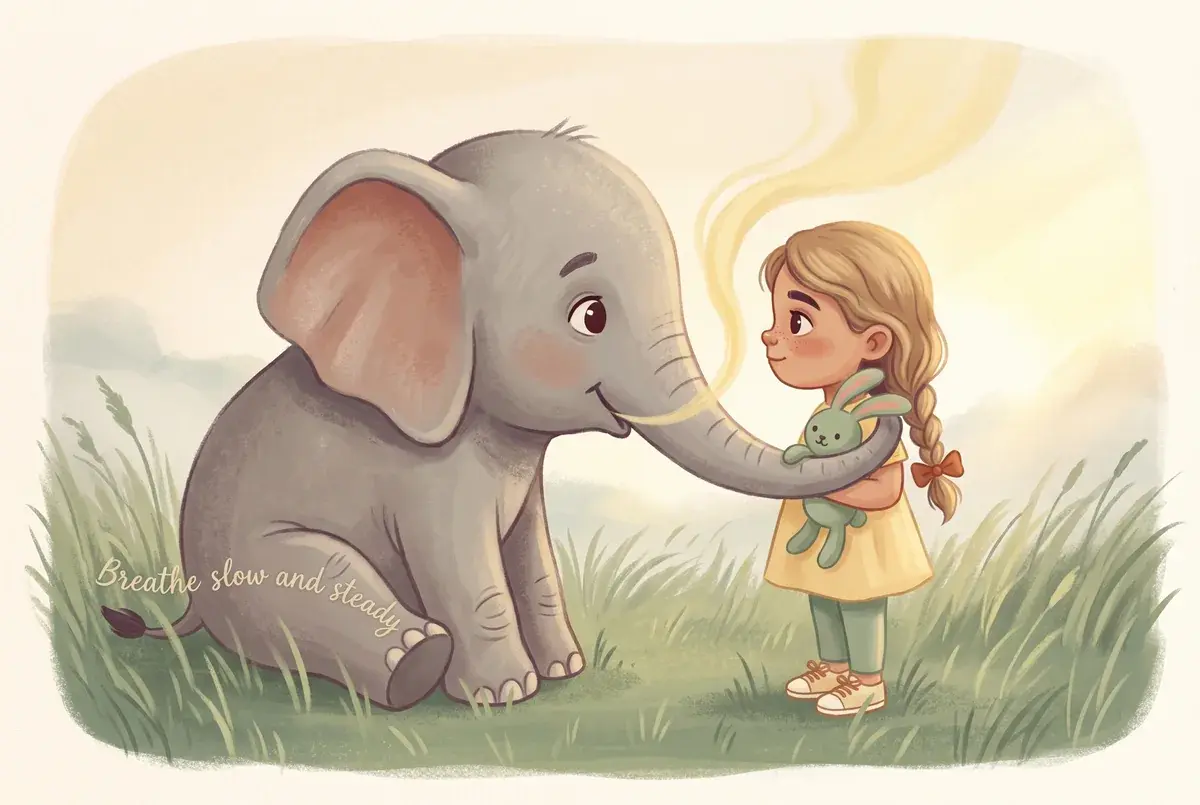
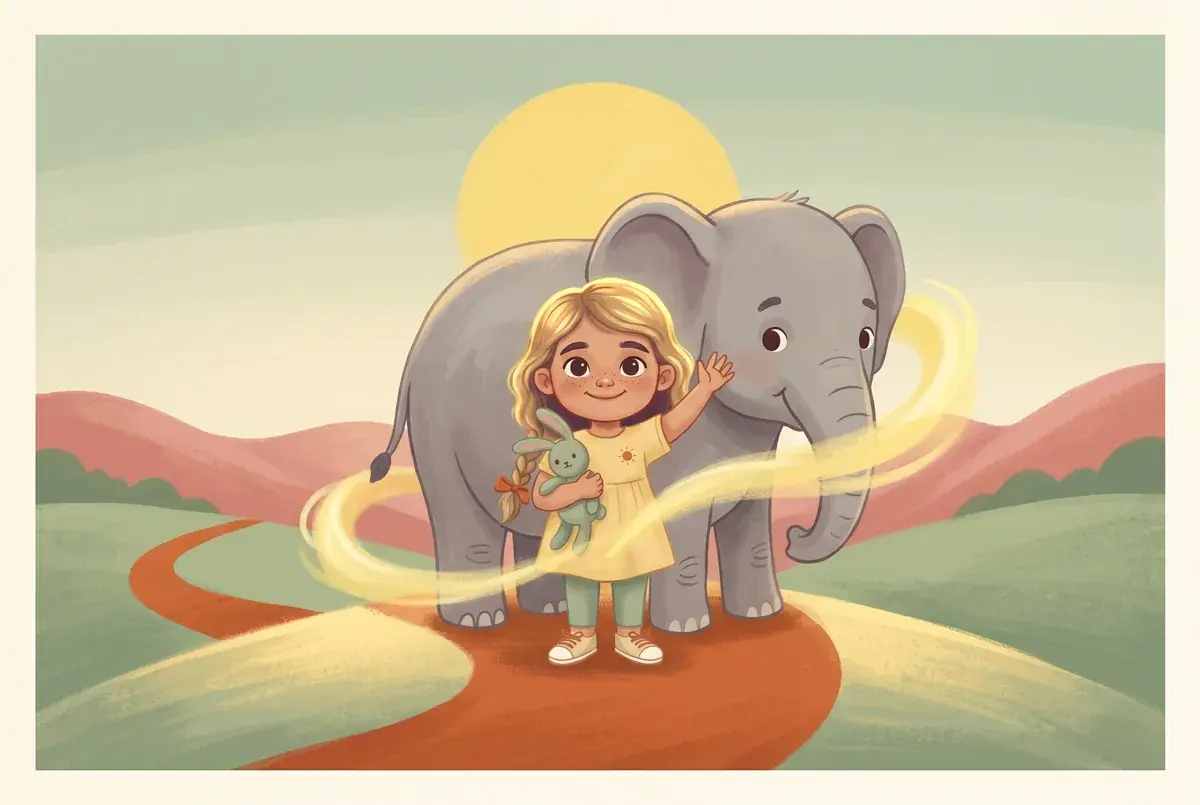
One story. Two ways to tell it.
Same hero, same adventure, same price. One is pure adventure. The other quietly weaves in a coping skill.
- 02The feeling
- 03The mentor
- 04It works
In both editions
- Your child as the hero, on every page
- Their name in the title
- 24 pages, landscape A4 · 24 illustrations
- All 36 themes to choose from
Only in Growth+
A gentle lesson, woven so subtly into the adventure it never feels like one. Still 80% fun.
- Bedtime
- Big feelings
- Goodbyes
- Potty
- Photos are deleted after printing — or 30 days after you approve
- Every story unique — no templates
- Every detail you give ends up in the story
Potty books at a glance
| Book | Author | Ages | Format | Best for |
|---|---|---|---|---|
| Potty | Leslie Patricelli | 0–3 | Board book, also English-Spanish | A first potty book |
| P Is for Potty! | Naomi Kleinberg | 0–3 | Lift-the-flap board book | Busy hands, Elmo fans |
| Potty Time with Bean | Ms. Rachel | 0–3 | Board book | Toddlers who love songs |
| Big Girl Panties / Big Boy Underpants | Fran Manushkin | 0–3 | Board books | The switch to underwear |
| Diapers Are Not Forever | Elizabeth Verdick | Up to 4 | Board book, also English-Spanish | Bilingual families |
| Once Upon a Potty | Alona Frankel | 1–3 | Picture book, girl and boy editions | A girl or boy version |
| Potty! | Carol Zeavin, Rhona Silverbush | 2–3 | Hardcover picture book | A child who isn't ready yet |
| Time to Pee! | Mo Willems | 2–4 | Picture book | A worried child |
| Dinosaur vs. the Potty | Bob Shea | 3–5 | Picture book | A child who holds it |
| Everyone Poops | Taro Gomi | 2–5 | Picture book | Curious kids |
When to start reading potty books
You can start reading before your child is ready to train. The AAP says children typically show bladder and bowel control between 18 and 24 months. In the US, training usually begins between ages 2 and 3, and most children are trained by 4 (HealthyChildren.org (opens in a new tab)).
Signs of readiness include staying dry for at least 2 hours, showing signals before peeing or pooping, following simple instructions and asking for big-kid underwear. The AAP also suggests waiting during big changes, such as a move or a new baby (HealthyChildren.org (opens in a new tab)). A potty book read in that waiting time does no harm. It simply makes the idea familiar.
Potty training books for parents
Parent books fall into two broad camps. Gradual approaches follow your child over weeks or months. Intensive ones pack training into a few days or less. The AAP says it is not necessary to choose a single method, and that children benefit from a mix of approaches (HealthyChildren.org (opens in a new tab)).
The American Academy of Pediatrics Guide to Toilet Training
The pediatricians' guide, in a revised second edition from 2016 (Bantam (opens in a new tab)). It covers readiness, accidents, bedwetting, resistance, constipation, choosing a technique, and children with special needs. Best for parents who want the medical view before picking a method.
Oh Crap! Potty Training, by Jamie Glowacki
A step-by-step plan in six "blocks" (Gallery Books, 2024 edition (opens in a new tab)). The publisher's description puts the ideal start between 20 and 30 months. Best for parents of a child around two who want a clear plan to follow.
Toilet Training in Less Than a Day, by Nathan Azrin and Richard M. Foxx
The intensive end of the range (Gallery Books (opens in a new tab)). After some pre-training, it walks you through one concentrated session, with supply lists and reminder sheets, ending in a "Potty Training Diploma." Best for parents who can clear a whole day and want a script.
The First-Time Parent's Guide to Potty Training, by Jazmine McCoy, PsyD
A 3-day program from a clinical psychologist (Zeitgeist, 2020 (opens in a new tab)). It also covers naps and nights, day care, regression and tantrums, with advice for anxious, willful or reluctant children. Best for parents drawn to the 3-day idea who want help with the hard cases.
How a story can help with potty training
Using the potty starts with a skill nobody can show a toddler: noticing the feeling of needing to go. The AAP says simple words for what is happening help children connect that feeling to the potty. Toddlers also rehearse it in pretend play, and stopping a fun game to go gets easier around age three (HealthyChildren.org (opens in a new tab)). A story lets your child watch a hero do all of this first.
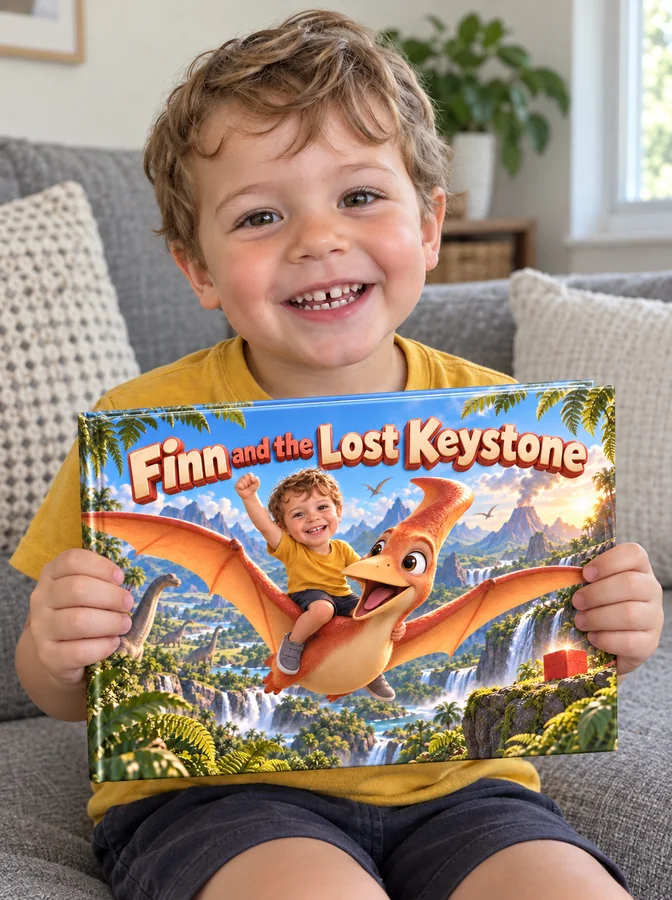
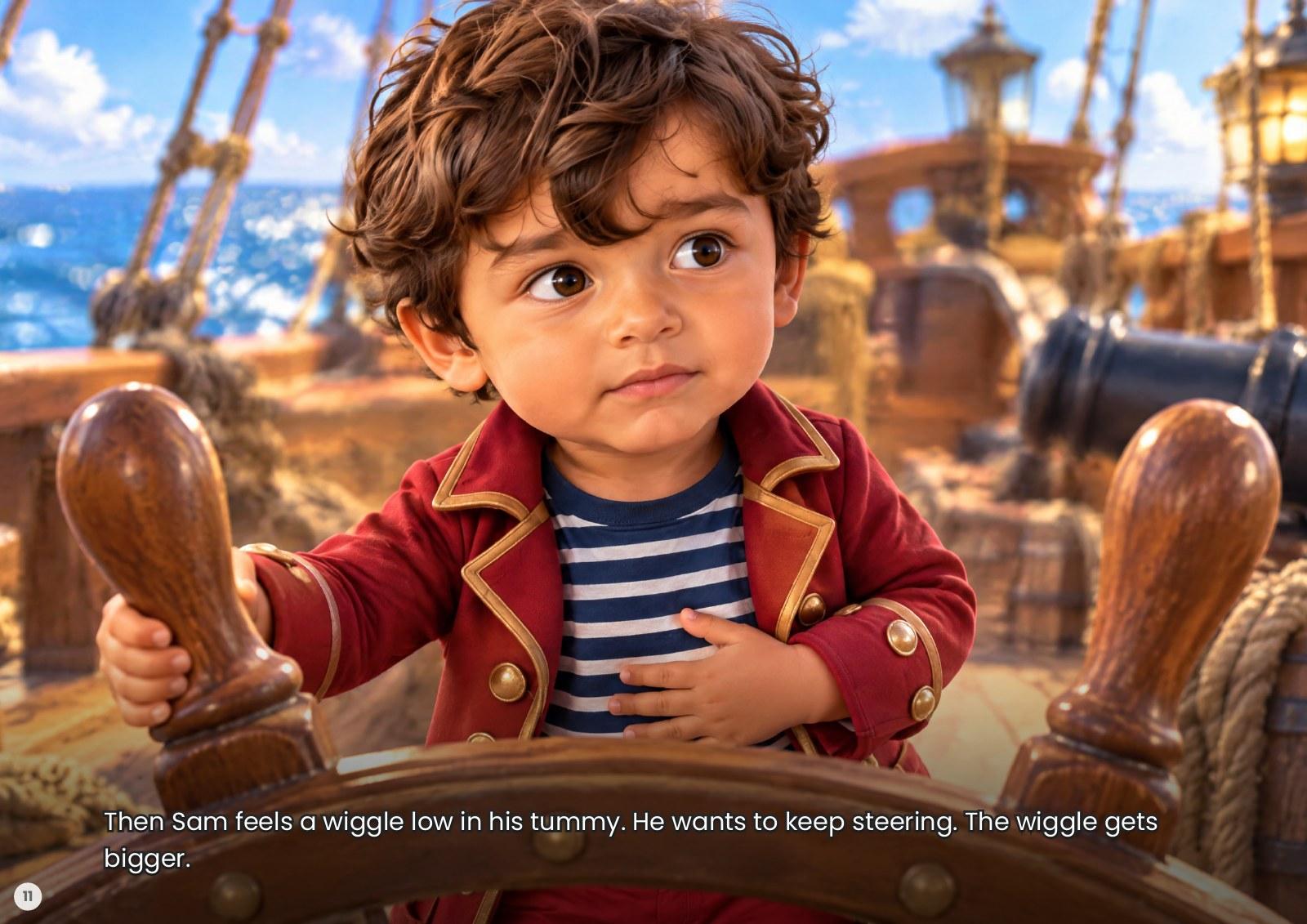
Fiktola makes personalized picture books where your child is the hero, drawn from your photo. Our potty book draws on bibliotherapy, the use of stories to help children through hard moments. You tell us where you are, how your child reacts to the potty and what motivates them. The book is an ordinary, fun adventure in the world you pick. In the middle, over three or four pages, the hero feels the signal, says it in their own words and reaches a small, private toilet built from that world, just in time. No accident ever happens in the book.
Here is how that looks in an example book we made, Captain Sam and the Treasure Map:
1 of 3:
The feeling
Then Sam feels a wiggle low in his tummy. He wants to keep steering. The wiggle gets bigger.
2 of 3:
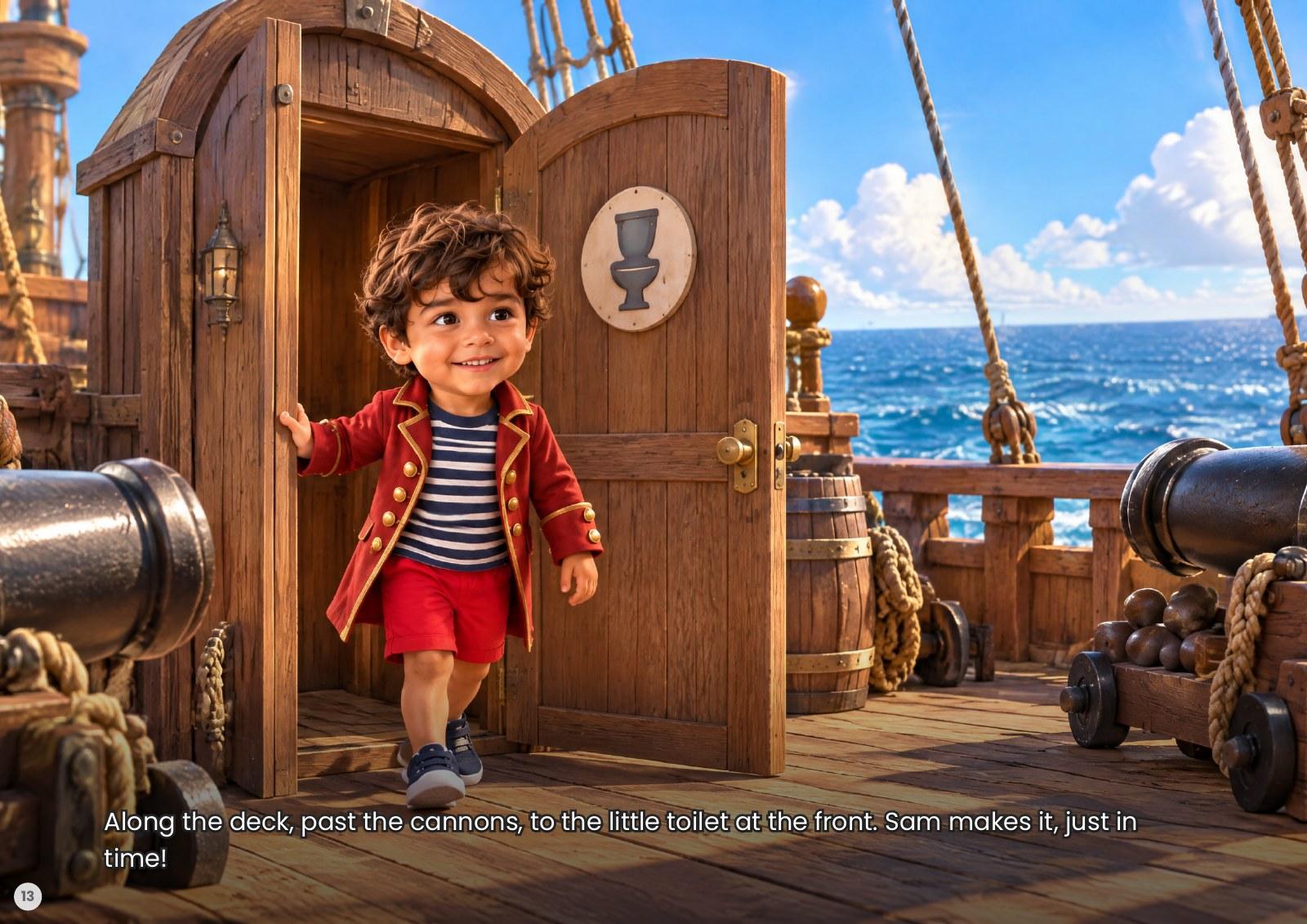
Just in time
Along the deck, past the cannons, to the little toilet at the front. Sam makes it, just in time!
3 of 3:
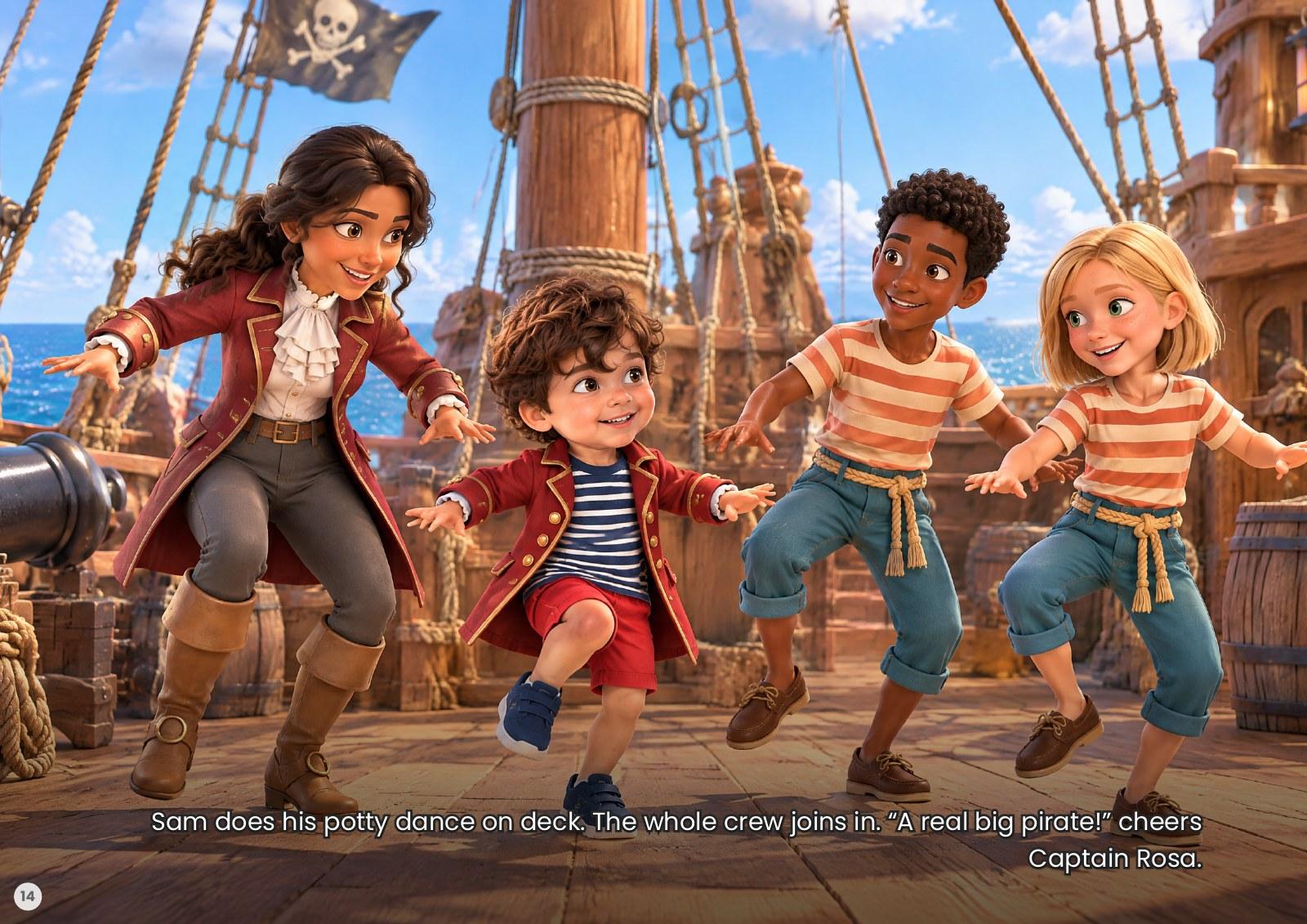
The potty dance
Sam does his potty dance on deck. The whole crew joins in. “A real big pirate!” cheers Captain Rosa.
You read the whole story before you pay (a potty story starring your child), or browse all our books for big moments. It is a picture book, not medical advice, and it sits happily next to the books above.
How to use a potty book so it helps
The AAP suggests reading children's books about using the toilet, to help the process make sense and feel inviting (HealthyChildren.org (opens in a new tab)). A few habits make that work better.
-
Start before the potty does. Read the book as an ordinary story for a week or two before you begin. No questions, no pressure.
-
Keep it by the potty. The AAP notes that books or toys kept for potty time can make sitting there more fun (HealthyChildren.org (opens in a new tab)).
-
Let your child read it to a toy. Toddlers practice using the potty through pretend play with stuffed animals or dolls (HealthyChildren.org (opens in a new tab)). A teddy on a toy potty, listening in, counts.
-
Borrow the book's words. Use the same upbeat words for pee, poop and the potty every day, as the AAP suggests.
-
Name it in the moment. Short comments like "you're peeing" help your child link the feeling to what is happening.
-
Keep it light. Read for fun, never as a lecture. The AAP warns that power struggles, begging and punishing keep children from managing their own toileting.
-
Make it part of the day. A potty stop between pajamas and teeth fits easily into a calm toddler bedtime routine.
-
Move up a shelf. A flap book that thrilled your child at 20 months may bore them at three. Swap it for a story with more plot.
When to talk to your pediatrician
This guide is general information, not medical advice. Talk to your pediatrician if your child is 4 or older and not yet potty trained, or if a child who was trained starts having regular problems (KidsHealth (opens in a new tab)). Staying dry at night often comes later than daytime, and it can take months or even years. And call any time something worries you.
Every detail you give ends up in the story
- Finn · 3
 Frequent accidents
 Being a big kid
 Dinosaurs
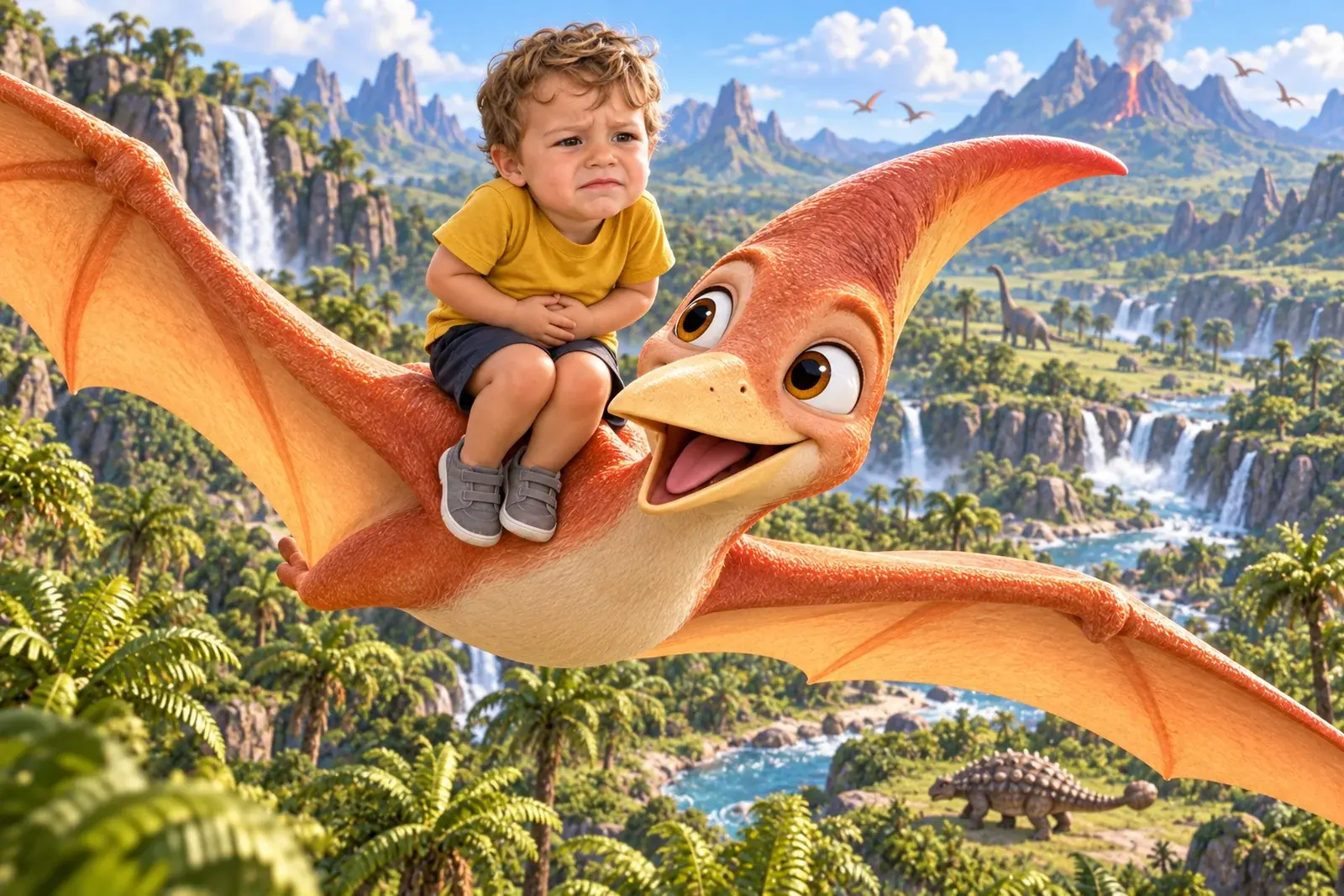
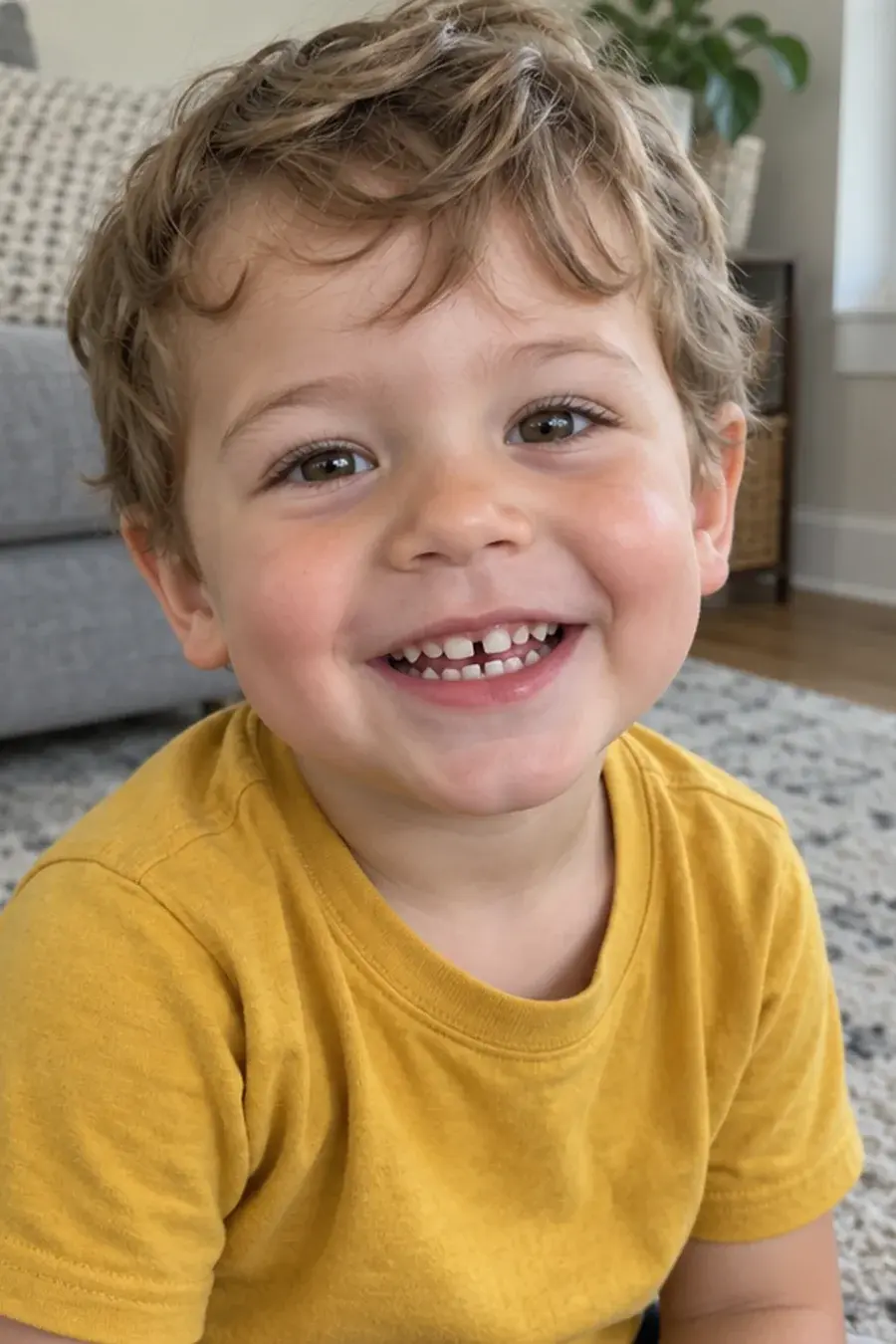 painted from his photo
+ 15 minutes waiting
- Photos are deleted after printing — or 30 days after you approve
- Every story unique — no templates
Questions parents ask
What is the best book for potty training a toddler?
It depends on age. Under two, a sturdy board book works best, such as Potty by Leslie Patricelli or the lift-the-flap P Is for Potty! From two to three, try a simple story like Time to Pee! by Mo Willems. From three, humor wins, and Dinosaur vs. the Potty by Bob Shea is a good fit. For yourself, start with the American Academy of Pediatrics Guide to Toilet Training.
When should I start reading potty books?
Before you start training, and then all the way through. The American Academy of Pediatrics says children typically show bladder and bowel control between 18 and 24 months, and US families usually begin training between ages 2 and 3. Reading potty books as ordinary stories a few weeks ahead makes the idea familiar, with no pressure on your child.
Are there potty training books for boys and for girls?
Yes, though most potty books work for any child. Once Upon a Potty by Alona Frankel comes in separate girl and boy editions, which differ mainly in anatomy. Fran Manushkin wrote two rhyming companion board books, Big Girl Panties and Big Boy Underpants. Books like Potty, Time to Pee! and Everyone Poops suit boys and girls alike.
What is a good potty training book for parents?
The American Academy of Pediatrics Guide to Toilet Training gives the medical overview: readiness, accidents, resistance and choosing a method. If you want a set plan, Oh Crap! Potty Training by Jamie Glowacki uses six steps, while The First-Time Parent's Guide to Potty Training by Jazmine McCoy follows a 3-day program. The AAP notes you don't have to pick a single method.
Do potty books actually help?
No book trains a child on its own. The American Academy of Pediatrics suggests reading children's books about using the toilet because they help the process make sense and feel inviting. A book also gives you shared words for pee, poop and the potty, and something calm to do while your child sits. Think of it as support for readiness, routine and patience.
When should I talk to a doctor about potty training?
Most US children are bowel and bladder trained by age 4, according to the American Academy of Pediatrics. Nemours KidsHealth suggests talking to your doctor if your child is 4 or older and not yet trained, or if a child who was trained starts having regular problems. Staying dry at night often comes later and can take months or years.
Sources
- Potty Training: 12 Tips to Keep the Process Positive (opens in a new tab) — American Academy of Pediatrics (HealthyChildren.org)
- The Right Age to Potty Train (opens in a new tab) — American Academy of Pediatrics (HealthyChildren.org)
- Potty Training Readiness: Thinking, Language & Developmental Milestones (opens in a new tab) — American Academy of Pediatrics (HealthyChildren.org)
- Toilet Training: Which Method is Best? (opens in a new tab) — American Academy of Pediatrics (HealthyChildren.org)
- Toilet Training (opens in a new tab) — Nemours KidsHealth
- Potty, by Leslie Patricelli (opens in a new tab) — Penguin Random House (Candlewick)
- Potty/Bacinica, by Leslie Patricelli (opens in a new tab) — Penguin Random House (Candlewick)
- P Is for Potty! (Sesame Street), by Naomi Kleinberg (opens in a new tab) — Penguin Random House
- Potty Time with Bean (Ms. Rachel) (opens in a new tab) — Penguin Random House
- Big Girl Panties, by Fran Manushkin (opens in a new tab) — Penguin Random House
- Big Boy Underpants, by Fran Manushkin (opens in a new tab) — Penguin Random House
- Diapers Are Not Forever Board Book (opens in a new tab) — Teacher Created Materials (Free Spirit Publishing)
- Spring 2014 Children's Announcements: E - L (Diapers Are Not Forever / Los panales no son para siempre) (opens in a new tab) — Publishers Weekly
- Once Upon a Potty - Girl (review) (opens in a new tab) — Kirkus Reviews
- Potty! (Terrific Toddlers) (opens in a new tab) — Magination Press, American Psychological Association
- Potty! sample pages (opens in a new tab) — Magination Press, American Psychological Association
- Time to Pee! (review) (opens in a new tab) — Kirkus Reviews
- Dinosaur vs. the Potty (review) (opens in a new tab) — Kirkus Reviews
- Everyone Poops (review) (opens in a new tab) — Kirkus Reviews
- The American Academy of Pediatrics Guide to Toilet Training (opens in a new tab) — Penguin Random House (Bantam)
- Oh Crap! Potty Training, by Jamie Glowacki (opens in a new tab) — Harvard Book Store
- Toilet Training in Less Than a Day, by Nathan Azrin and Richard M. Foxx (opens in a new tab) — Simon & Schuster (Gallery Books)
- The First-Time Parent's Guide to Potty Training, by Jazmine McCoy, PsyD (opens in a new tab) — Penguin Random House (Zeitgeist)