Books for Big Moments: Sleep, Potty, Feelings and New Siblings
Bedtime Routine for Preschoolers: Sample Plans for Ages 3, 4 and 5
A good bedtime routine for preschoolers is about 30 minutes of the same calm steps every night. Here are timed sample routines for ages 3, 4 and 5, what changes when the nap ends, and calm answers to stalling, fears of the dark and nightmares.

Key takeaways
- Children aged 3 to 5 need 10 to 13 hours of sleep in 24 hours, naps included.
- Keep the routine to about 30 minutes, same steps in the same order, screens off an hour before bed.
- From about 4, let your child run the routine with a picture chart and two real choices.
- When the nap ends, keep a quiet time and move bedtime earlier, not later.
- Set the limits on books, songs and drinks before the routine starts, not at lights out.
The short answer: a bedtime routine for preschoolers
A good bedtime routine for preschoolers is four or five calm steps, done in the same order every night. It takes about 30 minutes and ends with lights out at a set time. Children aged 3 to 5 need 10 to 13 hours of sleep in 24 hours, naps included (CDC (opens in a new tab)). What's new at this age: your child can run part of the routine, and the nap is on its way out.
- Screens off, then quiet play. About an hour before lights out.
- Bath or wash. Short and calm.
- Pajamas, teeth, potty. In the same order each night.
- Books and talk time. One or two books, then a few words about the day.
- Lights out and the goodbye line. The same short sentence every night.
From about 4, let your child tick off each step on a picture chart. Then the chart, not you, says what comes next.
How much sleep do preschoolers need?
The American Academy of Sleep Medicine recommends 10 to 13 hours of sleep in 24 hours for children aged 3 to 5, naps included. The American Academy of Pediatrics (AAP) supports these ranges (HealthyChildren.org (opens in a new tab)), and the CDC (opens in a new tab) lists them too. From age 6, the range is 9 to 12 hours.
Find your child's bedtime from wake-up time
Start from the time your child has to be up, then count back:
- Pick a total near the middle of the range, such as 11½ to 12 hours.
- Take off the nap, if there still is one.
- Count the rest back from wake-up time. That's lights out.
- Start the routine 30 minutes before that.
Say your 4-year-old wakes at 7 a.m. and no longer naps. Aim for about 11½ hours, and lights out lands at 7:30 p.m., with the routine starting at 7:00. The AAP also advises keeping wake-up time the same on weekdays and weekends (HealthyChildren.org (opens in a new tab)).
Is your child younger than 3? Our bedtime routine for toddlers under 3 has sample times from 18 months.
Every detail you give ends up in the story
- Zoe · 5
 Afraid of the dark
 Light must stay on
 Princesses

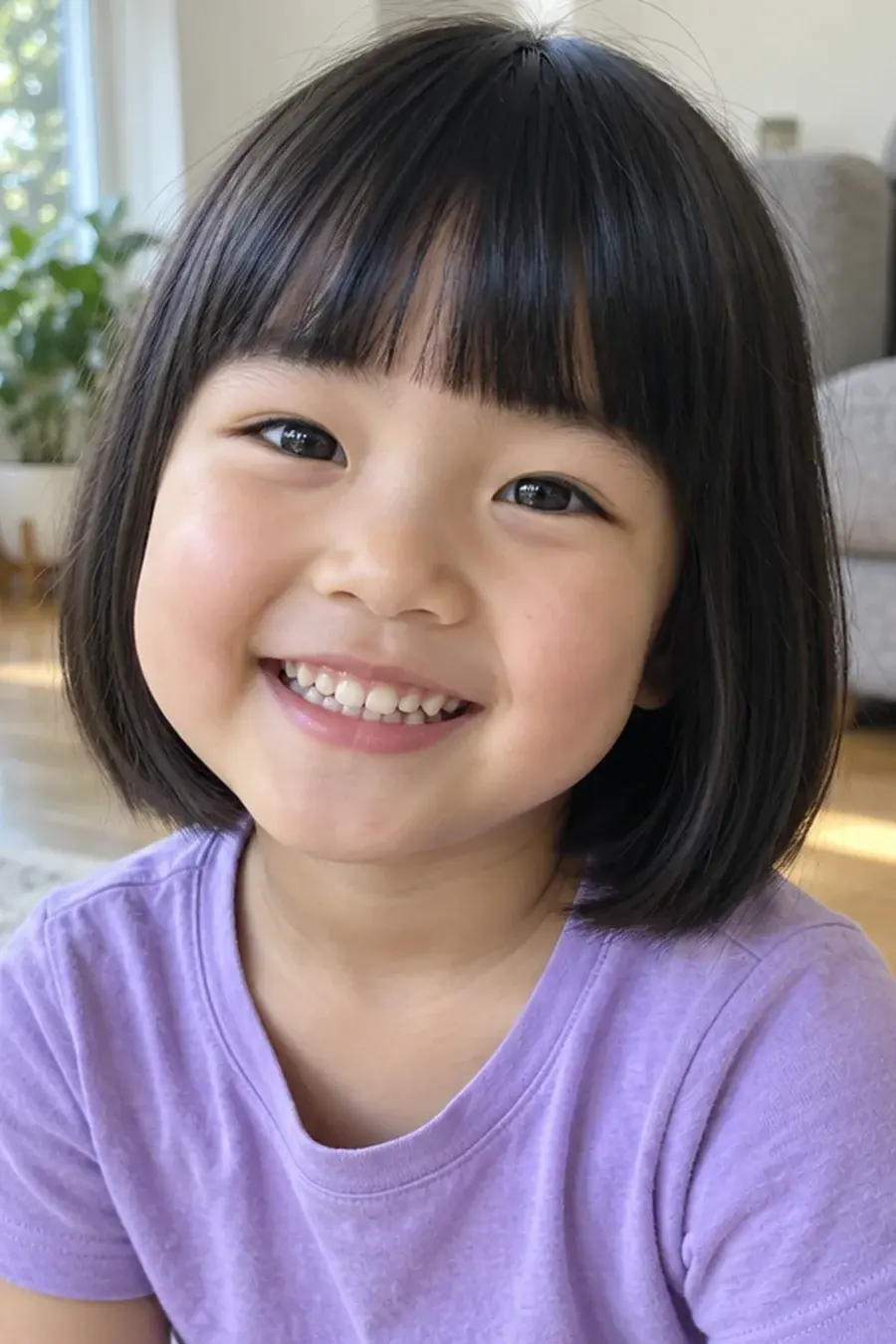 painted from her photo
+ 15 minutes waiting
- Photos are deleted after printing — or 30 days after you approve
- Every story unique — no templates
Sample bedtime routines for 3, 4 and 5 year olds
These are examples, not rules. Move the clock times to fit your family, but keep the order and the length.
| Age 3 | Age 4 | Age 5 | |
|---|---|---|---|
| Wake up | 6:45 a.m. | 7:00 a.m. | 7:00 a.m. |
| Midday | Nap, 1:00–2:00 p.m. | Quiet time, 1:00–1:45 p.m. | Quiet time after school |
| Dinner | 5:45 p.m. | 5:45 p.m. | 6:00 p.m. |
| Screens off | 6:30 p.m. | 6:30 p.m. | 6:45 p.m. |
| Routine starts | 7:00 p.m. | 7:00 p.m. | 7:15 p.m. |
| Books and talk | 7:10 p.m. | 7:10 p.m. | 7:25 p.m. |
| Lights out | 7:30 p.m. | 7:30 p.m. | 7:45 p.m. |
| Sleep in 24 hours | about 12¼ hours | about 11½ hours | about 11¼ hours |
| Who runs it | You lead, they choose | They tick the chart, you help | They run the chart, you read |
Each example lands inside the 10 to 13 hour range. Notice that the 4-year-old, with no nap, goes to bed no later than the 3-year-old.
A bedtime routine for a 3-year-old
Three is the bridge year. Most 3-year-olds still nap (Sleep Foundation (opens in a new tab)), and your child still needs you to lead each step. Give small choices instead: which pajamas, which book, which cup. If a long nap means your child can't fall asleep at night, the Sleep Foundation suggests shortening the nap rather than pushing bedtime later.
A bedtime routine for a 4-year-old
Four is often the year of "one more" and of big imaginations. Many 4-year-olds are dropping the nap (Sleep Foundation (opens in a new tab)), so the table swaps it for quiet time and an early lights out. This is a good age to start a picture chart: your child ticks off each step while you stay close.
A bedtime routine for a 5-year-old
Five-year-olds can do most steps themselves: pajamas, potty, a first go at brushing. You still take a turn with the toothbrush, read, and say goodnight. By 5, most children no longer need a nap (Sleep Foundation (opens in a new tab)), and kindergarten may bring an earlier wake-up. A tired kindergartner usually needs an earlier bedtime, not a later one.
The steps, and why each one is there
Screens off and quiet play
The AAP advises turning off all screens at least an hour before bedtime and keeping them out of the bedroom (HealthyChildren.org (opens in a new tab)). Swap them for a puzzle, drawing or play dough, with the lights a little lower.
Bath or wash, pajamas, teeth and potty
A warm bath is a clear sign that the day is ending, but a quick wash works on busy nights. For teeth, the AAP advises a pea-sized amount of fluoride toothpaste for ages 3 to 6. Let your child brush first, then take your own turn, and have them spit out the extra without rinsing (HealthyChildren.org (opens in a new tab)). Make the potty the last stop before books, so it can't become a reason to get up later.
Books and talk time
The AAP's "Brush, Book, Bed" plan calls for a favorite book or two. It notes that even 15 minutes of reading a day supports language and social-emotional skills (HealthyChildren.org (opens in a new tab)). After the book, keep two or three minutes for talk: one good thing and one hard thing from the day. If something is worrying your child, this is often when it comes out.
Lights out and the goodbye line
Pick one short goodbye and say it the same way every night: "Goodnight, I love you, see you in the morning." Then leave while your child is drowsy but still awake, so they practice falling asleep on their own (Sleep Foundation (opens in a new tab)). A favorite soft toy or blanket can help them feel safe (KidsHealth (opens in a new tab)).
Let your preschooler run the routine
Routines work best when they happen nearly every night. In a study of more than 10,000 children up to age 5 in 13 countries and regions, the more often families kept a bedtime routine, the earlier children went to bed and the faster they fell asleep. They also woke less at night and slept longer (Mindell et al., Sleep, 2015 (opens in a new tab)). The study shows a link, not proof of cause.
Preschoolers like to be in charge, and a picture chart lets them. You can make one in ten minutes:
- Draw five boxes on a sheet of paper, one for each step.
- Have your child draw each step, or take a photo of them doing it.
- Tape the chart at their eye level, by the bathroom or the bed.
- Your child moves a clothespin or adds a sticker as each step is done.
Offer two real choices along the way. "The dinosaur pajamas or the striped ones?" "This book or that one?" Letting children pick their pajamas or a book can head off stalling (Sleep Foundation (opens in a new tab)). Skip open questions like "Are you ready for bed?" A preschooler will happily answer "no."
When the nap ends
Most 3-year-olds still nap. By 4, many have stopped, and by 5 most children no longer need a nap (Sleep Foundation (opens in a new tab)). Signs your child may be ready to drop it:
- They play or sing through nap time instead of sleeping.
- On nap days, they take a long time to fall asleep at night.
- On days without a nap, they are not cranky in the evening.
Keep the midday break, though. A quiet time in the same place at the same time, with books, puzzles or crayons, still gives your child a rest (KidsHealth (opens in a new tab)). On days without a nap, move bedtime earlier. The Sleep Foundation notes that a preschooler who has stopped napping may need lights out as early as 6:00 or 6:30 p.m., depending on wake-up time. If your child is irritable and overtired every evening, they probably still need a nap, perhaps a shorter one (Sleep Foundation (opens in a new tab)).
How a story can help at bedtime
Preschoolers stall for reasons they can't name yet. A character with the same trouble gives them words for it. The AAP notes that reading books about common feelings together can help children recognize their own emotions (HealthyChildren.org (opens in a new tab)). Using stories this way is called bibliotherapy. In one small trial, children aged 5 to 7 with strong night-time fears read a picture book about the dark with a parent and did its exercises for four weeks. Anxiety eased clearly in eight of the nine children (Lewis et al., Journal of Anxiety Disorders, 2015 (opens in a new tab)).
Fiktola makes personalized picture books with your child as the hero, drawn from your photo. Our sleep books draw on bibliotherapy. You tell us what happens at night, how it shows in your child, and what helps them settle. The book is an ordinary, fun adventure. Near the end, as the fantasy world goes to sleep, the hero meets a little one with the same trouble, and what helps your child settles the little one too. On the last three pages, back home at bedtime, the hero gives the feeling a name your child can copy, does what helps and falls asleep.
In our example book, Mila and the Sleepy Herd, the trouble is the "one more" stall:
1 of 4:
The feeling
But Bramble won't lie down. One more drink from the stream. One more roll. One more look at the moon.

2 of 4:
What helps
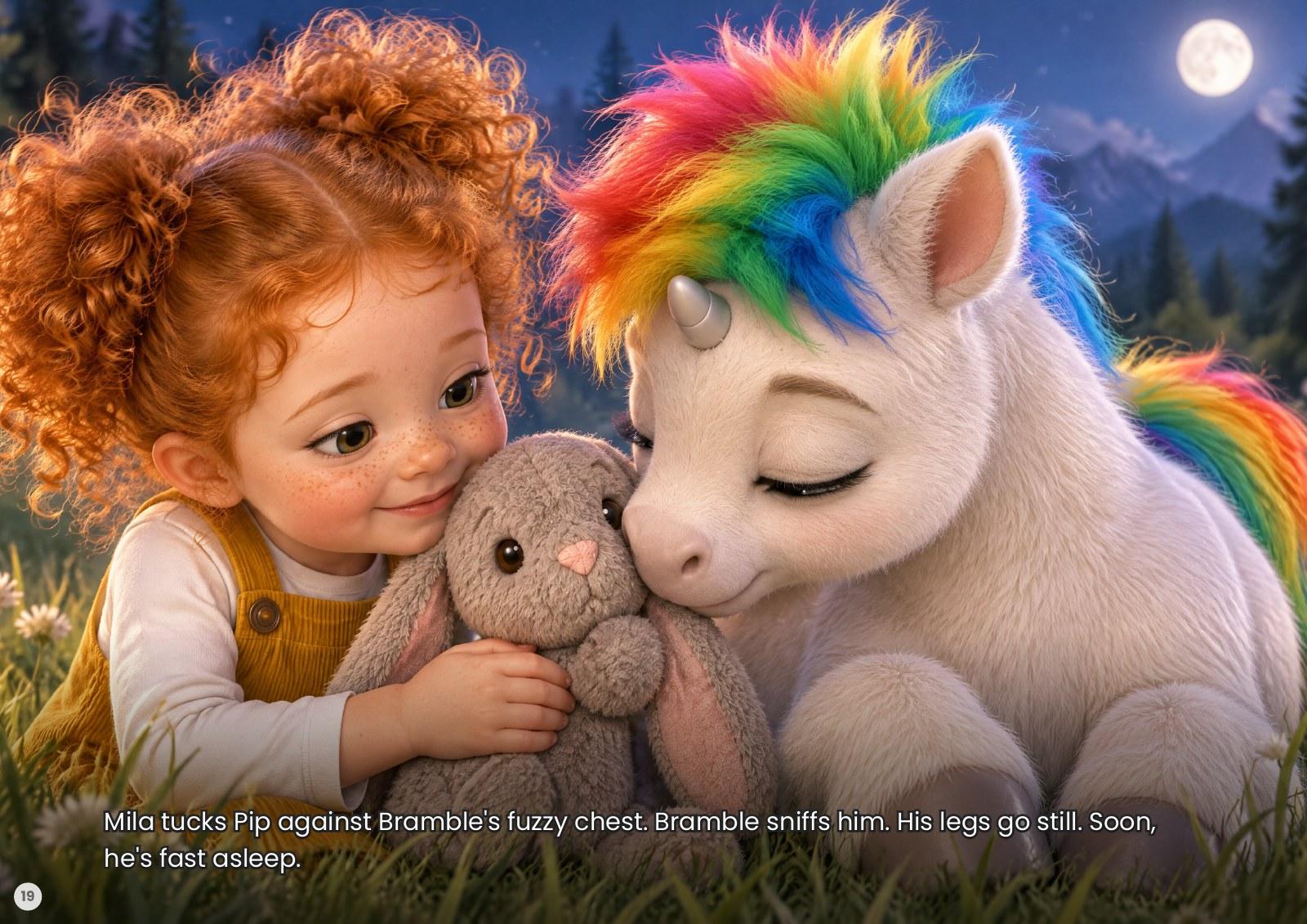
Mila tucks Pip against Bramble's fuzzy chest. Bramble sniffs him. His legs go still. Soon, he's fast asleep.
3 of 4:
Bedtime at home
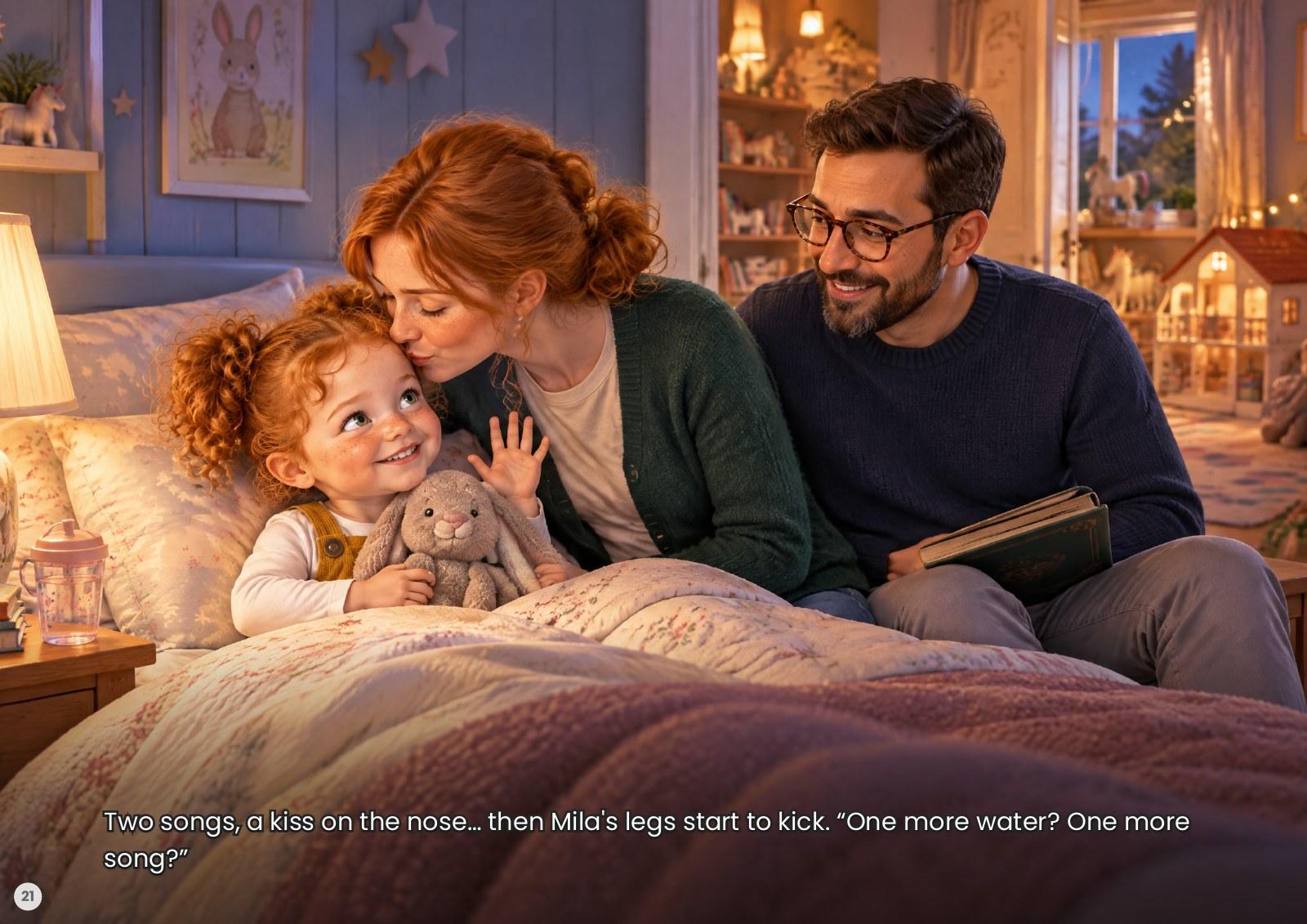
Two songs, a kiss on the nose… then Mila's legs start to kick. “One more water? One more song?”
4 of 4:
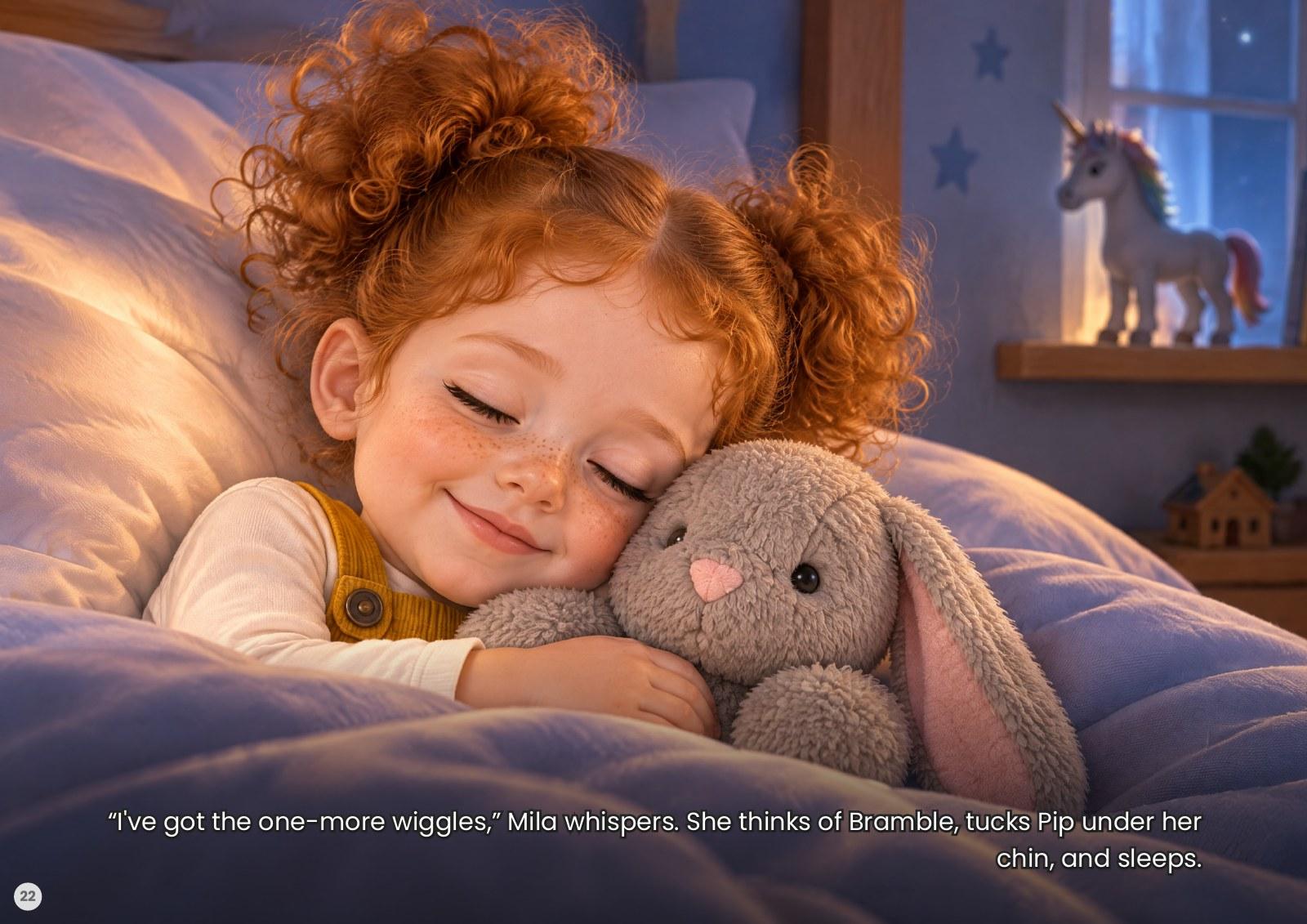
Asleep at home
“I've got the one-more wiggles,” Mila whispers. She thinks of Bramble, tucks Pip under her chin, and sleeps.
You read the whole story before you pay (how a sleep book works). It is a picture book, not therapy.
Common preschool bedtime problems
"Just one more"
Settle the limits before the routine starts: two books, one song, one sip of water. Then answer every extra request with the same calm line, such as "You've had your water. It's sleep time now." Keep your voice friendly and flat, and don't add new reasons.
Some families use a bedtime pass: a card the child can trade for one trip out of the room or one extra visit after lights out. Once it is used, parents let other calls go, unless the child is sick or hurt. In a small randomized trial of children aged 3 to 6, those with the pass left their rooms and called out less, and settled faster, than a comparison group. The change held three months later (Moore et al., Journal of Pediatric Psychology, 2007 (opens in a new tab)).
Afraid of the dark or of monsters
Preschool imaginations are vivid, and a shadow can easily become a monster. Take the fear seriously and never tease. A night light, a hall light left on, or a favorite soft toy can help a child feel safe (KidsHealth (opens in a new tab)). Some children like to check the closet and under the bed with you. Skip scary shows and stories before bed, and talk about the fear in daylight, when your child is calm (KidsHealth (opens in a new tab)).
Nightmares and night terrors
They can look alike to a worried parent, but they are different, and so is what helps (HealthyChildren.org (opens in a new tab)).
| Nightmare | Night terror | |
|---|---|---|
| When | Second half of the night | Early in the night, often before you go to bed |
| What you see | Your child wakes up crying or scared | Your child is still asleep and may not know you're there |
| Next morning | Usually remembers the dream | Doesn't remember it |
| What to do | Go quickly, comfort, leave a light on if it helps | Stay calm and keep your child from getting hurt |
Nightmares tend to peak between ages 3 and 12, and night terrors are most common in toddlers and preschoolers (HealthyChildren.org (opens in a new tab)). Talk to your pediatrician if night terrors keep happening, or if nightmares come more than once a week (KidsHealth (opens in a new tab)).
Out of the big-kid bed, again and again
Walk your child back calmly, every time, with the same few words. Keep it brief and boring, so getting up doesn't earn a chat (KidsHealth (opens in a new tab)). Praise a night in bed the next morning. The bedtime pass above was designed for exactly this.
Wet at night
Staying dry at night often comes well after daytime potty training. Many children under 5 still wet the bed, it is not their fault, and punishing it can make it worse (NHS (opens in a new tab)). Keep the potty as the last step before books. The AAP advises calling your pediatrician if a child who has been dry for six months starts wetting again, or if peeing hurts (HealthyChildren.org (opens in a new tab)).
Siblings who share a room
If bedtimes differ, put the younger child down first, and let the older one read quietly in another room before slipping in. If they keep each other awake, split them for a week, then try again.
Getting ready for kindergarten
Start a week or two before school, as the AAP suggests (HealthyChildren.org (opens in a new tab)). Move bedtime and wake-up 15 minutes earlier, then again every few days, until you reach the school-day times (Sleep Foundation (opens in a new tab)). Keep the routine exactly the same; only the clock moves. Kindergarten days are long, and a 5-year-old still needs 10 to 13 hours of sleep.
When to talk to your pediatrician
This guide gives general information, not medical advice. The AAP lists stalling and resisting bedtime, trouble falling asleep and waking at night among the sleep problems to raise with your pediatrician. It adds that most sleep problems are easily treated (HealthyChildren.org (opens in a new tab)).
Tell your pediatrician right away if you notice signs of sleep apnea: frequent snoring, problems breathing at night, sleepiness during the day, trouble paying attention or behavior problems. Call 911 if your child stops breathing for more than 20 seconds, or their skin looks pale, blue or gray (HealthyChildren.org (opens in a new tab)). Check in too if fears or nightmares keep your child from sleeping enough, or come with other emotional or behavior troubles (KidsHealth (opens in a new tab)).
A routine your preschooler can own
At 3 to 5, bedtime goes best when your child knows every step and gets to run some of them. Keep it boring on purpose: same steps, same order, same goodbye line. For harder nights, you can browse our books for big moments, from sleep to potty training.
Every story unique — no templates


- Photos are deleted after printing — or 30 days after you approve
- Every detail you give ends up in the story
Questions parents ask
What time should a preschooler go to bed?
There is no single right time, because it depends on when your child wakes up. Children aged 3 to 5 need 10 to 13 hours of sleep in 24 hours, naps included, according to the American Academy of Sleep Medicine. Count back from wake-up. A child who wakes at 7 a.m. and no longer naps gets about 11½ to 12 hours with lights out between 7:00 and 7:30 p.m.
How much sleep does a 4-year-old need?
A 4-year-old needs 10 to 13 hours of sleep in 24 hours, naps included. The range comes from the American Academy of Sleep Medicine, and the American Academy of Pediatrics supports it. Many 4-year-olds are dropping their nap, so most of that sleep has to happen at night. A 4-year-old who wakes at 7 a.m. with no nap gets about 11½ hours with lights out at 7:30 p.m.
Should my 4-year-old still nap?
Some 4-year-olds still nap and some don't, and both are normal. The Sleep Foundation notes that many children still nap at 4, while most no longer need a nap by 5. If your child plays through nap time, takes a long time to fall asleep at night, and isn't cranky on days without a nap, they may be ready to stop. Keep a quiet time instead, and move bedtime earlier.
How do I stop my preschooler stalling at bedtime?
Set the limits before the routine starts: how many books, songs and sips of water. Then answer every extra request with the same calm, short line. A picture chart helps, because the chart, not you, says what comes next. Some families use a bedtime pass, a card the child trades for one trip out of the room. In a small trial, it reduced calling out and leaving the room in children aged 3 to 6.
Is it normal for a 4-year-old to be afraid of the dark?
Yes. Night-time fears are a normal part of the preschool years, and KidsHealth notes that nightmares are normal too, especially at this age. Take the fear seriously and don't tease. A night light, a hall light left on, or a favorite soft toy can help your child feel safe. Avoid scary shows before bed. If fears keep your child from sleeping, talk to your pediatrician.
What is the difference between nightmares and night terrors?
A nightmare is a scary dream. It usually comes in the second half of the night, your child wakes up upset, and they often remember it. A night terror happens early in the night, in deep sleep. Your child is still asleep, may not recognize you, and won't remember it. Comfort a child after a nightmare. During a night terror, stay calm and keep them safe.
When should a 5-year-old go to bed before kindergarten?
Work back from the school-day wake-up. If your child must be up at 6:45 a.m. and no longer naps, lights out between 7:15 and 7:30 p.m. gives about 11¼ to 11½ hours. A week or two before school starts, move bedtime and wake-up 15 minutes earlier every few days until you reach the school times, as the AAP and the Sleep Foundation suggest.
Sources
- About Sleep (opens in a new tab) — Centers for Disease Control and Prevention
- Healthy Sleep Habits: How Many Hours Does Your Child Need? (opens in a new tab) — American Academy of Pediatrics (HealthyChildren.org)
- Brush, Book, Bed: How to Structure Your Child's Nighttime Routine (opens in a new tab) — American Academy of Pediatrics (HealthyChildren.org)
- Nightmares and Night Terrors in Preschoolers (opens in a new tab) — American Academy of Pediatrics (HealthyChildren.org)
- Bedwetting (opens in a new tab) — American Academy of Pediatrics (HealthyChildren.org)
- Sleep Apnea in Children: Detection & Treatment (opens in a new tab) — American Academy of Pediatrics (HealthyChildren.org)
- Back to School Tips (opens in a new tab) — American Academy of Pediatrics (HealthyChildren.org)
- Recommended Reading: Books to Teach Kids About Feelings and Resilience (opens in a new tab) — American Academy of Pediatrics (HealthyChildren.org)
- Bedtime Routines for Children (opens in a new tab) — Sleep Foundation
- When Do Kids Stop Napping? (opens in a new tab) — Sleep Foundation
- Back-to-School Sleep Tips (opens in a new tab) — Sleep Foundation
- Sleep and Your Preschooler (opens in a new tab) — Nemours KidsHealth
- Nightmares (opens in a new tab) — Nemours KidsHealth
- Bedwetting (opens in a new tab) — NHS
- Bedtime routines for young children: a dose-dependent association with sleep outcomes (Mindell et al., Sleep, 2015) (opens in a new tab) — PubMed (U.S. National Library of Medicine)
- Evaluating the Bedtime Pass Program for child resistance to bedtime: a randomized, controlled trial (Moore et al., Journal of Pediatric Psychology, 2007) (opens in a new tab) — PubMed (U.S. National Library of Medicine)
- Treating nighttime fears in young children with bibliotherapy (Lewis et al., Journal of Anxiety Disorders, 2015) (opens in a new tab) — PubMed (U.S. National Library of Medicine)