Books for Big Moments: Sleep, Potty, Feelings and New Siblings
When to Start Potty Training: Signs Your Child Is Ready
Most children are ready to start potty training between 18 months and 3 years, but readiness signs matter more than age. Here are the typical ages, a 12-sign checklist, times to wait, and when to talk to your pediatrician.

Key takeaways
- Most children show bladder and bowel control between 18 and 24 months; in the US, training usually starts between 2 and 3.
- Readiness signs matter more than age: staying dry for 2 hours, following simple instructions and wanting to use the potty.
- Wait during big changes, like a new baby, a move, travel or illness.
- Nights come later than days, and bedwetting is common well past age 4.
- Talk to your pediatrician if your child is 4 and not trained, or if peeing or pooping hurts.
Wondering when to start potty training? Most children are ready somewhere between 18 months and 3 years. The signs your child shows matter far more than their birthday. Below you'll find the typical ages, a quick readiness checklist, times to wait, and when to call your pediatrician.
When to start potty training: the short answer
Most children show signs of bladder and bowel control between 18 and 24 months. In the US, potty training usually begins between ages 2 and 3, and most children are trained by age 4, says the American Academy of Pediatrics (HealthyChildren.org (opens in a new tab)). Start when your child shows most of the readiness signs below.
What's typical at each age
| Age | What's typical |
|---|---|
| 12 to 18 months | Your child begins to connect the feeling of a full bladder or bowel with peeing or pooping. |
| 18 to 24 months | First signs of bladder and bowel control. |
| 2 to 3 years | The most common time to start in the US. By 2½ to 3, many children can manage the steps on their own. |
| 3½ to 4 years | Still normal. Most children are trained by 4. |
| 4 and older | Not trained yet? Talk to your pediatrician. |
Sources: the AAP on the right age (opens in a new tab) and the thinking skills it takes (opens in a new tab), KidsHealth (opens in a new tab) and Cleveland Clinic (opens in a new tab).
A birthday tells you little on its own. What matters is whether your child's body, words and mood are ready together. The AAP notes that training can begin whenever parent and child want to start (HealthyChildren.org (opens in a new tab)). Start too soon, though, and it tends to take longer (KidsHealth (opens in a new tab)).
Signs your child is ready
Readiness has three parts: the body, understanding and wanting to. Watch for these signs over a week or two, not on one good day.
| Body | Understanding and words | Feelings and wanting to |
|---|---|---|
| Stays dry for 2 hours, or wakes up dry from naps | Follows simple one-step instructions | Dislikes a wet or dirty diaper and wants it changed |
| Grunts, squats or goes still before peeing or pooping | Has words or signs for pee, poop and potty | Is curious about the toilet or follows you to the bathroom |
| Can walk to the bathroom and help pull pants down and up | Tells you when the diaper is wet or dirty | Asks to use the potty or to wear "big-kid" underwear |
| Has soft poops at least every other day | Can ask you for help | Enjoys sitting on the potty or talking about it |
Sources: the AAP's readiness list (opens in a new tab) and emotional readiness (opens in a new tab) pages, KidsHealth (opens in a new tab), Cleveland Clinic (opens in a new tab) and the NHS (opens in a new tab), which suggests checking that poops are soft before you begin.
How to read the checklist
This is a rule of thumb, not a test.
- Most of the 12 signs: your child is probably ready. Pick a calm week and start.
- About half: get ready without pushing. Put out a potty, read a potty book and try a few practice sits. Check again in two or three weeks.
- Only a few, or tears at the word "potty": wait. When a child resists the idea or cries, the AAP suggests waiting for a better time (HealthyChildren.org (opens in a new tab)).
Some children never show clear signs. The NHS says you don't need to wait for them before you start (NHS (opens in a new tab)).
Two kinds of books
One story. Two ways to tell it.
Same hero, same adventure, same price. One is pure adventure. The other quietly weaves in a coping skill.
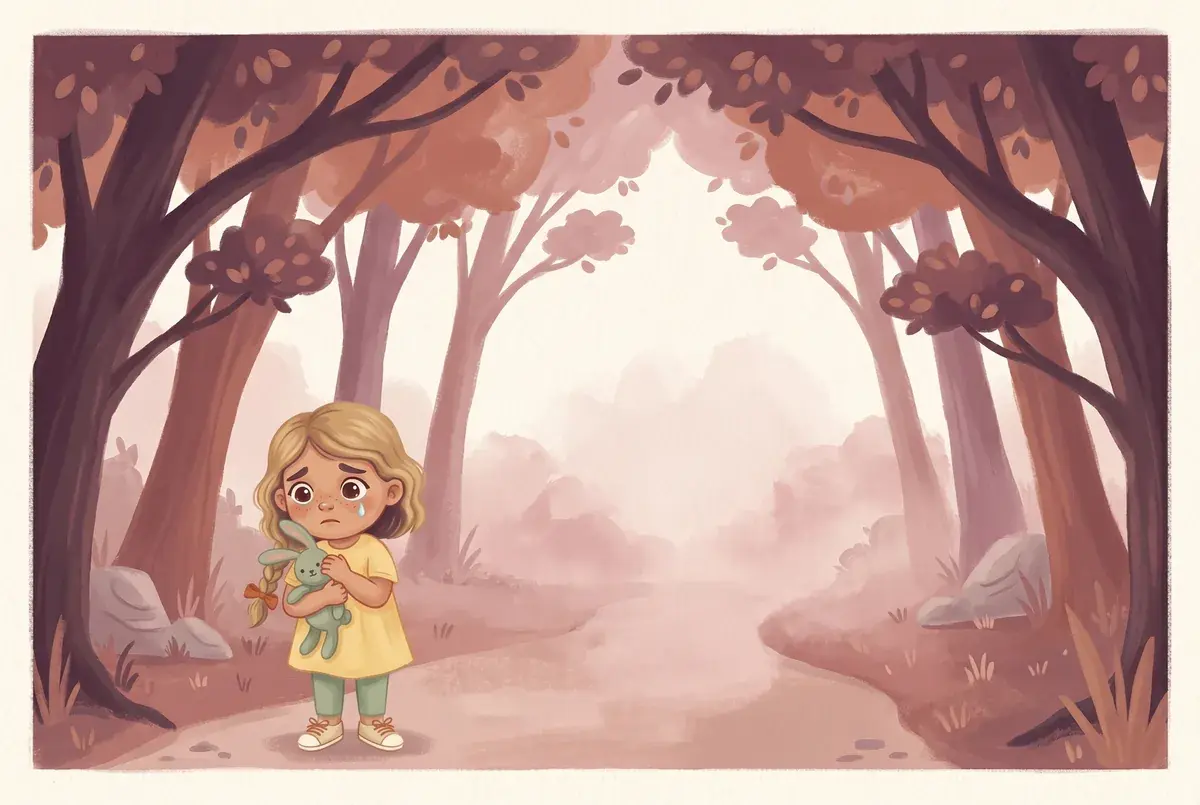
- 02The feeling
- 03The mentor
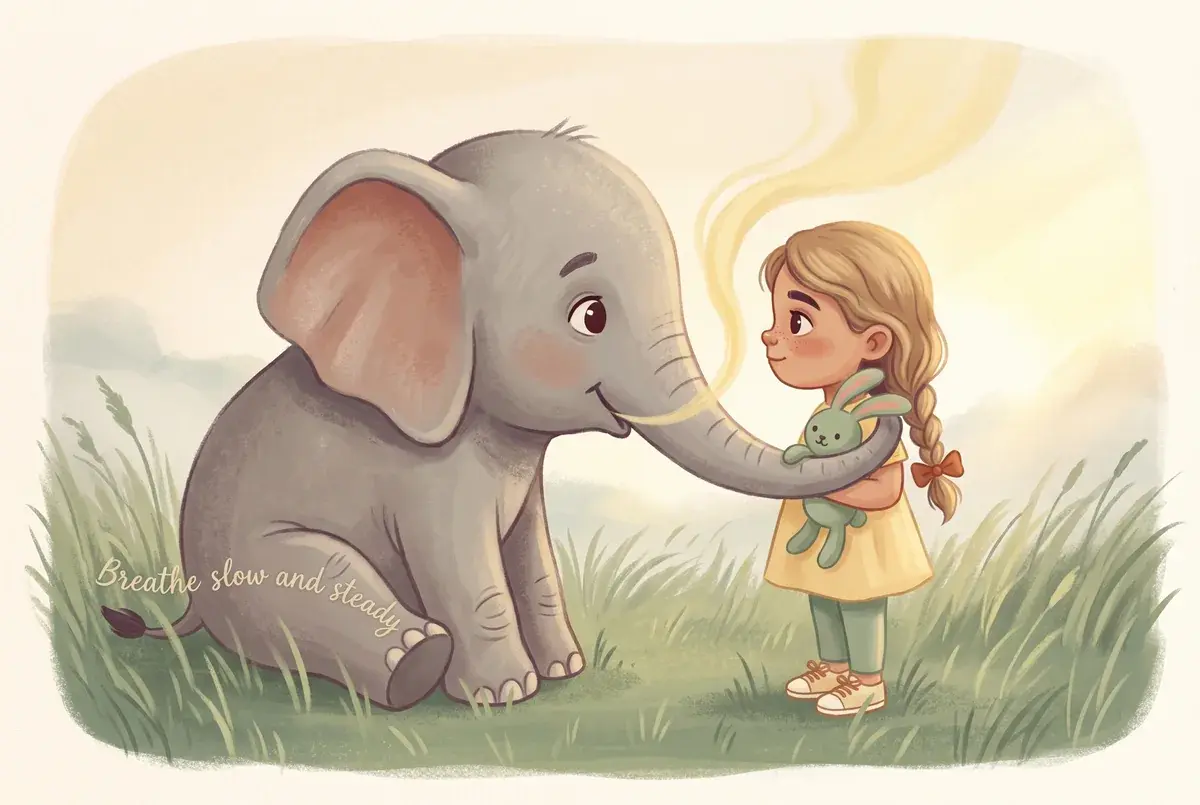
- 04It works

In both editions
- Your child as the hero, on every page
- Their name in the title
- 24 pages, landscape A4 · 24 illustrations
- All 36 themes to choose from
Only in Growth+
A gentle lesson, woven so subtly into the adventure it never feels like one. Still 80% fun.
- Bedtime
- Big feelings
- Goodbyes
- Potty
- Photos are deleted after printing — or 30 days after you approve
- Every story unique — no templates
- Every detail you give ends up in the story
Is it too early? Is it too late?
Starting before 2
It can work, especially for a child who watches older siblings. The AAP notes that children with older siblings are often trained earlier (HealthyChildren.org (opens in a new tab)). In the UK, the NHS says almost all children can be trained between 18 months and 2½ years (NHS (opens in a new tab)).
Still, the planning part, picturing the potty and getting there in time, usually settles in around age 2 or later (HealthyChildren.org (opens in a new tab)). So keep an early start light: practice sits and praise, not a strict schedule.
Starting at 2 to 3
This is the most common window in the US (HealthyChildren.org (opens in a new tab)). By 2½ to 3, many children can handle the whole chain on their own: notice the feeling, stop playing, walk to the potty and pull down their pants (HealthyChildren.org (opens in a new tab)).
It is also the age of "No!" If your 2-year-old refuses, the AAP advises cleaning up calmly, saying little and waiting for a more grown-up phase (HealthyChildren.org (opens in a new tab)).
Still in diapers at 3½ or 4
Age 3 is not too late. A Cleveland Clinic pediatrician says most children are ready between 2 and 3, and that 4 is still very normal (Cleveland Clinic (opens in a new tab)). The AAP even notes that an older child's wish to please can make training simpler (HealthyChildren.org (opens in a new tab)). Boys often start later and take longer to learn than girls (KidsHealth (opens in a new tab)).
Talk to your pediatrician if your child is 4 or older and not yet trained (KidsHealth (opens in a new tab)). If your child has special health care needs, the AAP notes that some tips may need to change, so make the plan with your doctor (HealthyChildren.org (opens in a new tab)).
Good times to start, and times to wait
Big changes make training harder. An unsettled toddler may grab control where they can, and some hold in their poop until they are constipated (HealthyChildren.org (opens in a new tab)).
| What's going on | What to do |
|---|---|
| A new baby is due, or just arrived | Wait until home life feels settled again |
| Moving house, or just moved | Wait until you're settled in |
| Moving from crib to bed | One change at a time |
| Travel | Wait until you're home |
| Your child is sick, especially with diarrhea | Wait until they're well |
| A death, a serious illness or another family crisis | Comfort first; training can wait |
| Starting daycare or preschool | Keep one plan at home and at daycare (see below) |
| A calm stretch at home, near a bathroom | A good time to start |
The AAP lists a move, a new baby and a family crisis as reasons to delay (HealthyChildren.org (opens in a new tab)). KidsHealth adds travel, illness and the crib-to-bed switch (KidsHealth (opens in a new tab)). The NHS notes that starting nursery (daycare) can affect training too (NHS (opens in a new tab)).
Season and clothing
Warm months are easier for many families: fewer layers and quicker laundry. In any season, choose pants with an elastic waist. Skip overalls, snap-crotch bodysuits and tights, which are slow to get off in a hurry (KidsHealth (opens in a new tab), NHS (opens in a new tab)).
When daycare has a deadline
If your child's daycare or preschool expects them to be trained by a date, talk to the staff early. Ask how they support children who are still learning. Share your child's words for pee and poop, and agree on one routine. The AAP stresses keeping your approach consistent with every caregiver (HealthyChildren.org (opens in a new tab)).
Child-led or parent-led?
Parents tend to fall into two camps. Child-led training waits for readiness signs and lets the child take over step by step. Parent-led training picks a start date, sometimes with an intensive few days.
The AAP does not name one best method. It lists copying a parent, reading about it, regular potty prompts and rewards, and says combining them helps (HealthyChildren.org (opens in a new tab)). The NHS leans toward starting without waiting for signs (NHS (opens in a new tab)). A Cleveland Clinic pediatrician says there is no one right way, but warns that a bad experience can make a child resist (Cleveland Clinic (opens in a new tab)).
What they agree on: keep it positive and never punish. Praise each step, and keep any reward small (HealthyChildren.org (opens in a new tab)). Sticker charts and other rewards are a topic of their own.
Daytime first, nights later
Staying dry by day and staying dry at night are two different skills. Most children are toilet trained between 2 and 4, but some stay dry at night only when they're older (HealthyChildren.org (opens in a new tab)). Nighttime control can take months, or even years, longer (KidsHealth (opens in a new tab)).
So start with days. The NHS suggests keeping diapers on for naps and at night at first, and says most children learn to stay dry at night after they are dry by day (NHS (opens in a new tab)). If you try underwear at night and the wet beds come back, the AAP suggests going back to training pants for a while (HealthyChildren.org (opens in a new tab)). A last potty trip fits neatly into a calm toddler bedtime routine.
Wet nights are common well past the toddler years: about 15% of 5- and 7-year-olds still wet the bed. Don't blame your child, the AAP says; most children outgrow it (HealthyChildren.org (opens in a new tab)).
Getting ready: the week before you start
A slow week of getting ready makes day one less of a leap. Start with your child:
- Read a potty book or two. The AAP suggests it, to make the toilet feel inviting (HealthyChildren.org (opens in a new tab)).
- Let your child watch. Children learn by copying, so let them see a parent or older sibling use the toilet (HealthyChildren.org (opens in a new tab)).
- Choose the potty together. A floor potty, or a seat on the toilet with a step stool (KidsHealth (opens in a new tab)). Keep it in the same place every day (HealthyChildren.org (opens in a new tab)).
- Practice sitting. Clothes on at first, then bare-bottomed, after waking up or after meals (KidsHealth (opens in a new tab)).
Then get the grown-ups ready:
- Pick your words. Choose simple words for pee, poop and potty, and use them every time (KidsHealth (opens in a new tab)).
- Change diapers in the bathroom, so the place and the job go together (NHS (opens in a new tab)).
- Put every caregiver on one plan. Same words, same steps, at home, at grandma's and at daycare (HealthyChildren.org (opens in a new tab)).
How a story can help before you start
A book lets a toddler see the potty routine before they have to do it. The AAP suggests reading children's books about using the toilet, so the process makes sense and feels exciting (HealthyChildren.org (opens in a new tab)). The NHS lists reading potty books together as a way to get ready (NHS (opens in a new tab)).
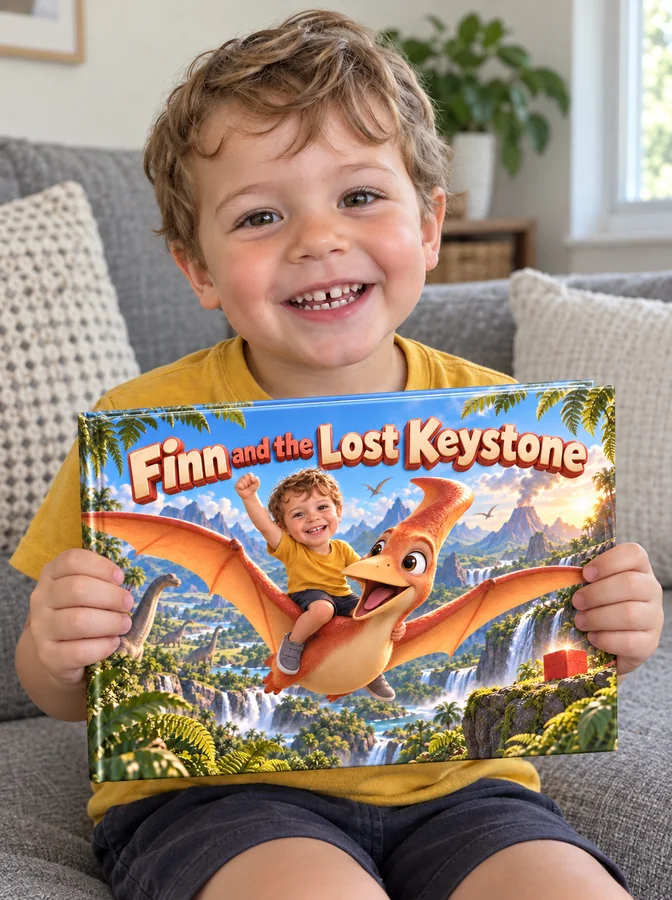
A Fiktola potty book draws on bibliotherapy: using stories to help children with feelings and hard moments. You answer three questions: where you are (just starting, resisting the potty, or dry by day but not at night), how your child reacts to the potty, and what motivates them. The book is an ordinary, fun adventure in the world you pick, with your child as the hero.
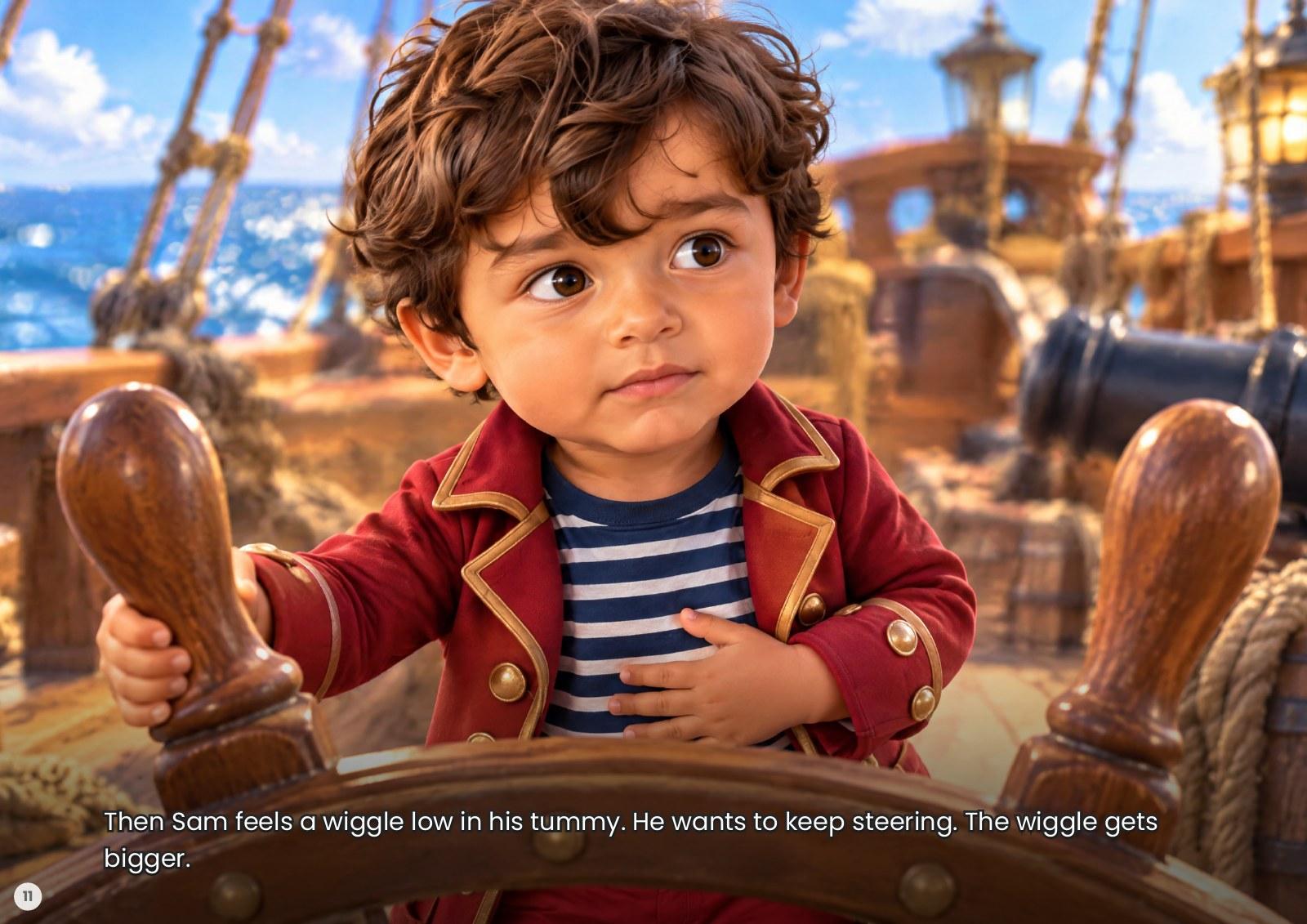
In a daytime potty book, the potty moment comes in the middle of the adventure, over three or four pages. The hero feels the signal, says it in their own words and reaches the toilet in time. The toilet is a small, private spot built from the adventure's world. No accident ever happens in the book. Here is that moment in Captain Sam and the Treasure Map, an example book we made:
1 of 4:
The feeling
Then Sam feels a wiggle low in his tummy. He wants to keep steering. The wiggle gets bigger.
2 of 4:
Saying it
“I need to pee!” says Sam. He gives the wheel to Captain Rosa and runs.

3 of 4:
Just in time
Along the deck, past the cannons, to the little toilet at the front. Sam makes it, just in time!

4 of 4:
The potty dance
Sam does his potty dance on deck. The whole crew joins in. “A real big pirate!” cheers Captain Rosa.

You read the whole story before you pay (how a potty story written around your child works). It is a picture book, not therapy or medical advice.
When to talk to your pediatrician
This guide is general information, not medical advice. The AAP's rule is simple: if any concern comes up before, during or after training, talk with your child's doctor (HealthyChildren.org (opens in a new tab)). Call sooner if you notice:
- Pain or straining when peeing, or pee that looks cloudy or pink (HealthyChildren.org (opens in a new tab)).
- Hard poops, straining or holding poop in. The NHS advises speaking to a doctor about hard poops or straining (NHS (opens in a new tab)).
- No progress at 4. Your child is 4 or older and not yet trained (KidsHealth (opens in a new tab)).
- Wetting again after months dry. Your child was fully trained for 6 months or more and suddenly wets the bed again (HealthyChildren.org (opens in a new tab)).
- Wetting both day and night once training is done (HealthyChildren.org (opens in a new tab)).
A trained child who starts having accidents again is a different question, called regression, and it gets its own guide.
Ready when they are
There is no perfect age, only a good moment for your child. Watch for the signs, pick a calm stretch and keep it light. If your child isn't ready yet, a few weeks of waiting costs little.
Fiktola makes personalized picture books: your child is the hero, drawn from your photo into a story written just for them. You can browse our books for big moments, from sleep to potty training.
Every detail you give ends up in the story
- Finn · 3
 Frequent accidents
 Being a big kid
 Dinosaurs
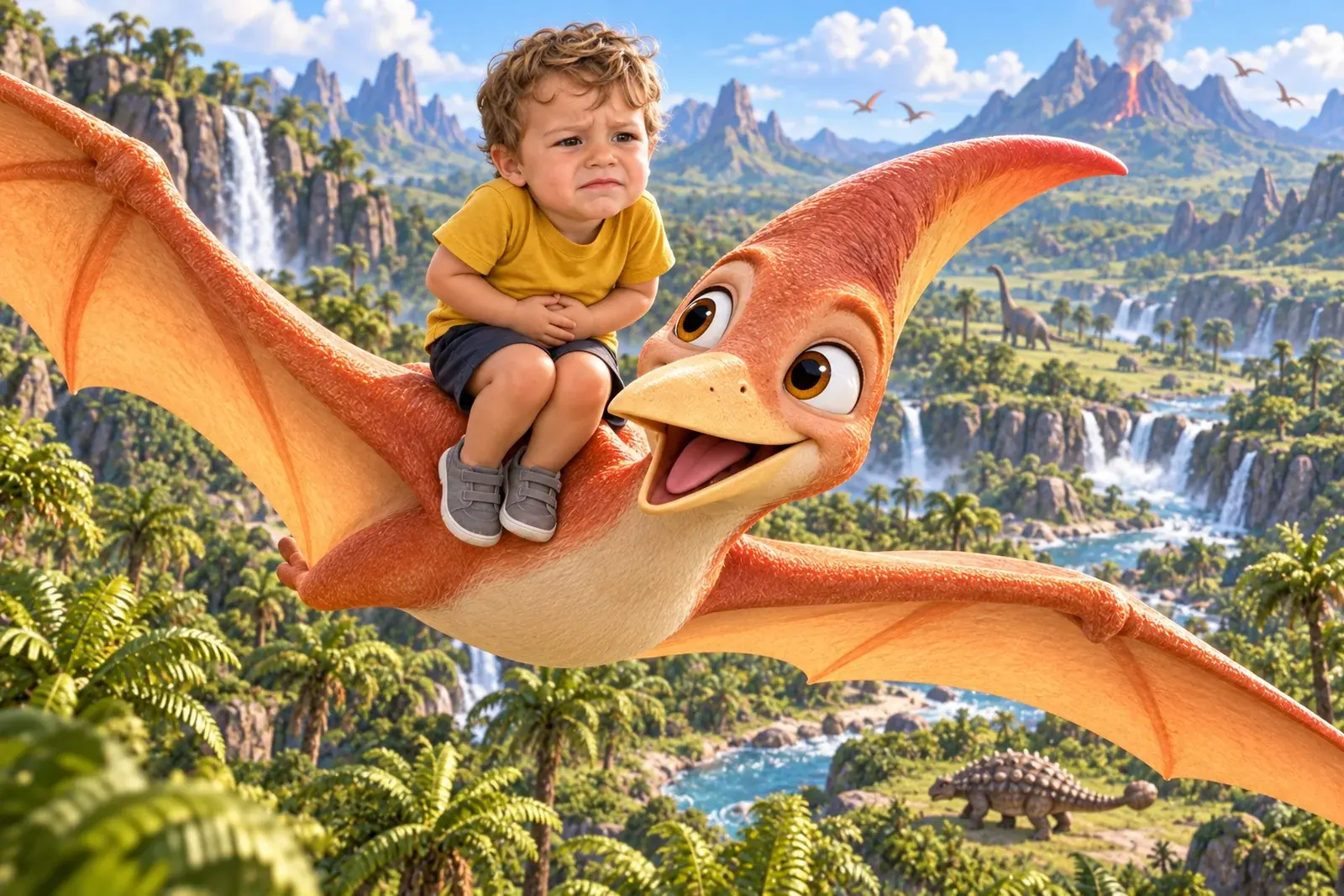
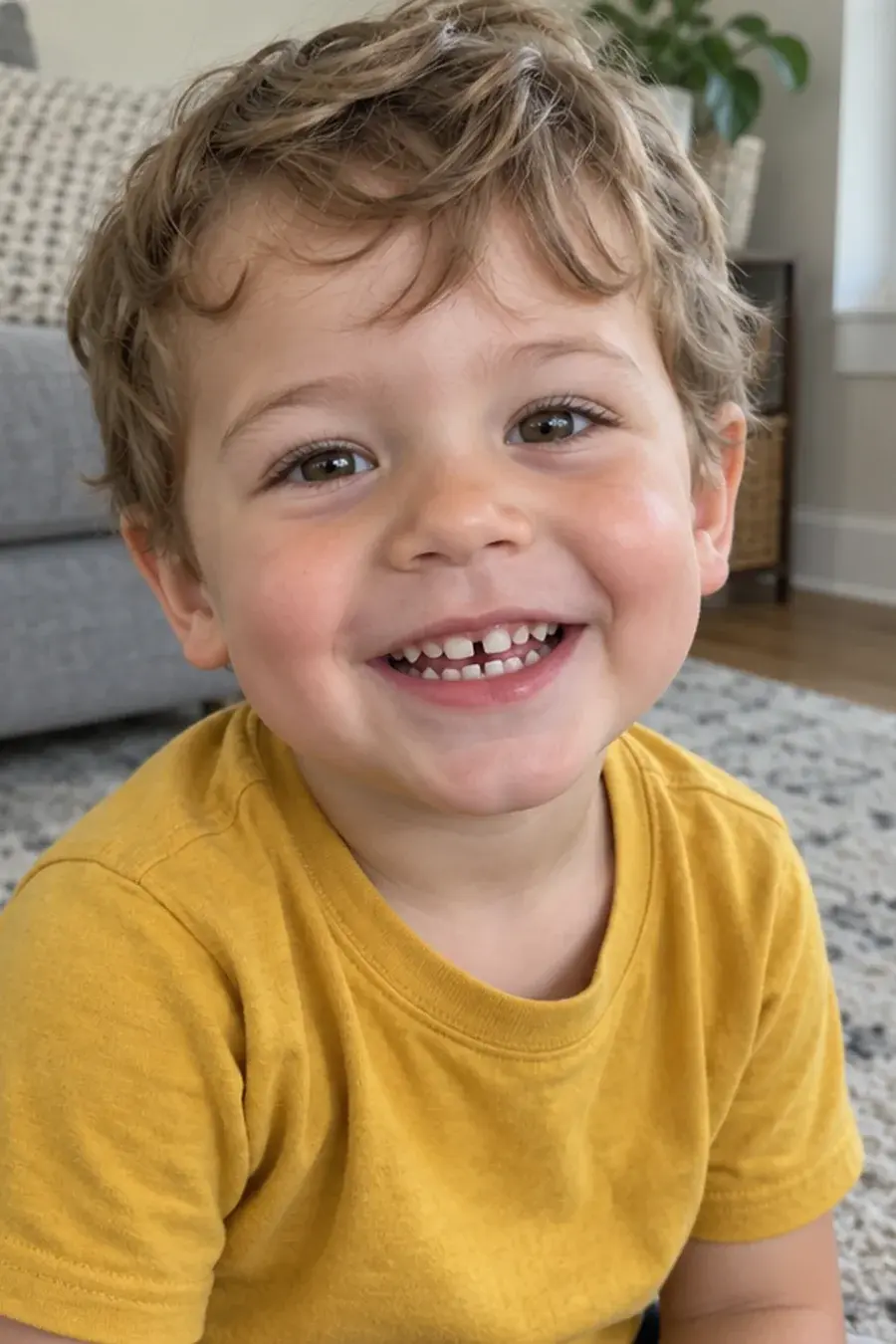 painted from his photo
+ 15 minutes waiting
- Photos are deleted after printing — or 30 days after you approve
- Every story unique — no templates
Questions parents ask
What is the best age to start potty training?
There is no single best age. Most children show signs of bladder and bowel control between 18 and 24 months, and the average start in the US is between 2 and 3, according to the American Academy of Pediatrics. Start when your child shows most of the readiness signs: staying dry for 2 hours, following simple instructions, telling you about a wet diaper and wanting to use the potty.
Is 2 too early to start potty training?
No. Two is inside the most common starting window in the US. Many 2-year-olds can stay dry for a couple of hours and tell you when they need to go, while others are not ready until closer to 3. If your child shows most of the readiness signs, try. If they resist or cry, wait a few weeks and try again calmly.
Is age 3 too late to potty train?
No. Many children start between 2 and 3, and a Cleveland Clinic pediatrician calls training as late as 4 very normal. Boys often start later than girls. An older child may even find it easier, because they can plan ahead, wait and ask for help. Talk to your pediatrician if your child is 4 or older and still not trained.
Is it normal for a 4-year-old not to be potty trained?
Most US children are trained by age 4, according to the American Academy of Pediatrics, so a 4-year-old still in diapers is worth a conversation with your pediatrician. The doctor can look for things that get in the way, like constipation, and help you make a plan. Children with special health care needs may need a plan adapted to them.
Should I wait to potty train if a new baby is coming?
Usually, yes. The American Academy of Pediatrics lists expecting a baby, or having just had one, as a reason to delay. A new sibling can unsettle a toddler, and some react by holding in their poop. If your child is already trained and doing well, keep the routine the same. Otherwise, wait until home life feels settled again.
At what age should a child be dry overnight?
There is no set age. Staying dry at night usually comes after staying dry by day, sometimes months or even years later. Most children are toilet trained between 2 and 4, but some stay dry at night only when they are older, the American Academy of Pediatrics says. Bedwetting is still common at ages 5 and 7. Call your pediatrician if a child who was dry for 6 months starts wetting again.
Do girls potty train earlier than boys?
Often, though every child is different. KidsHealth notes that boys often start later and take longer to learn than girls. The readiness signs are the same for both, and many boys learn to pee sitting down first and standing up later. Go by your own child's signs, not by what a sibling or cousin did at the same age.
Sources
- The Right Age to Potty Train (opens in a new tab) — American Academy of Pediatrics (HealthyChildren.org)
- Potty Training Readiness: Thinking, Language & Developmental Milestones (opens in a new tab) — American Academy of Pediatrics (HealthyChildren.org)
- Emotional Growth Needed for Toilet Training (opens in a new tab) — American Academy of Pediatrics (HealthyChildren.org)
- Toilet Training: Which Method is Best? (opens in a new tab) — American Academy of Pediatrics (HealthyChildren.org)
- Create a Potty Training Plan for Your Child (opens in a new tab) — American Academy of Pediatrics (HealthyChildren.org)
- Bedwetting: 3 Common Reasons & What Families Can Do (opens in a new tab) — American Academy of Pediatrics (HealthyChildren.org)
- Toilet Training (opens in a new tab) — Nemours KidsHealth
- Potty training your child (opens in a new tab) — NHS (Best Start in Life)
- How Does Three-Day (Naked) Potty Training Work? (opens in a new tab) — Cleveland Clinic